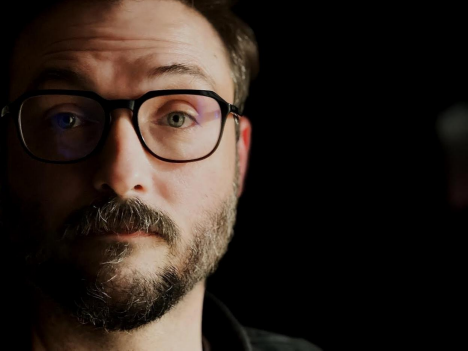
Welcome back to Lyric Essentials, where we invite authors to share the work of their favorite poets. This month, Kara Dorris joins us to discuss the work of Molly McCully Brown, video games as a source of inspiration for titles, metaphor, and disability poetics. As always, we hope you enjoy as much as we did.
Ryleigh Wann: Why did you choose to read these poems specifically?

Kara Dorris: When choosing which poems to read from Brown’s The Virgina State Colony for Epileptics and Feebleminded, I decided to pick the first poem, a proem, titled “Central Virginia Training Center.” This poem does the work of a great first poem by setting up a personal connection and reaching towards the broader, universal truth of disability as a social construction. “New Knowledge for the Dark” takes on the persona of an inmate and explores the abuse, the dehumanizing that has occurred in many psychiatric institutions around the country. In contrast, “Without a Mind” takes on the persona of a worker making their rounds, showing an ingrained ableism, a seemingly integrated presumption that disability is punishment for sin and a waste of a life. Each poem is compelling, revealing yet another injustice, and I can’t recommend this collection enough.
RW: Your collection, HitBox, is forthcoming from Kelsay Books in 2024. What does this collection explore and what was your writing process like?
KD: HitBox feels very different from my previous two collections—it feels angrier, less ready to accept what we are told by so-called authority figures yet hopeful that empathy, inclusiveness, and equality will triumph. As I wrote these poems over the past few years, I didn’t really consider it as a “book” or think to connect the poems consciously. But when it came time to arrange a manuscript, I noticed the violence, I noticed the questioning and the hitting occurring within the poems. I struggled with a unifying theme—beyond punches and feminist anger. Then I came across the term “hit box” used in video games and lightning struck. A hit box is the space around an avatar that registers when a punch lands, or when your avatar scores a hit and the connecting points. This hit box seemed the perfect metaphor for the “hits” the world throws our way, that knock us off our axis. Plus, I am constantly annoyed at the skimpy, over-sexualization of female video game characters, so a cohesive, angry, and hopeful book was born.
Kara Dorris reads “New Knowledge for the Dark” by Molly McCully Brown
RW: When was the first time you read Brown’s work? Why did it stand out to you? How has their writing inspired your own?
KD: This is Brown’s first poetry collection, and I think the title is what really drew me in at first: The Virgina State Colony for Epileptics and Feebleminded. Since then, I have also read her essay collection Places I’ve Taken My Body. Writing the disabled experience is challenging; oftentimes, disabled writers are considered too narrow or too personal or as trying to elicit pity. Oftentimes when disability is portrayed it focuses on the individual disability or impairment, not the social construction of disability that makes it hard to navigate through this world. Wonderfully, Brown’s collection shows disability as personal, but does not neglect the social stereotypes that create the larger experience of disability. Partly personal/speculative/what if—Brown wonders if she had been born just a few decades earlier, would she have ended up in this place? In this place where women were institutionalized forcibly sterilized, where patients were really inmates without rights or dignity. The poems are also part historical research—Brown embodies the voices that had no voice. Through persona poems—from wards and warders—we understand the helplessness of the inmates and ableist mindsets of those who assumed they knew what is best for the disabled population. I find this poetry collection fits into ideas of crip aesthetics, which shows that disability is socially constructed and celebrates differences; it shows the long history of forced institutionalization, even positioning us into locations such as the Blind Room and the Infirmary, inviting readers to walk through these doorways with the speakers, to never forget our harmful, ableist past.
Kara Dorris reads “Without a Mind” by Molly McCully Brown
RW: Who else have you been reading lately, and who else has been inspiring you in your own craft?
KD: I think we should all read more disabled poets: Sheila Black, Stephanie Heit, Petra Kuppers, Rusty Morrison, Jillian Wiese, and torrin a. greathouse. All these poets have inspired my writing and the way I write about disability. Growing up no one mentioned disability, even though I was born with a genetic bone disorder. In graduate school, I was never offered a disability studies class or a literature class that interrogated disability representation. For a long time, I didn’t have the vocabulary to describe my experiences, to put words to the socially constructed ideas of shame revolving around disability. These poets helped me find these words, and I will always be grateful.
Read more from this interview at our Patreon
Molly McCully Brown is the author of the essay collection Places I’ve Taken my Body— which was published in the United States in June 2020 by Persea Books, and released in the United Kingdom in March of 2021 by Faber & Faber— and the poetry collection The Virginia State Colony For Epileptics and Feebleminded (Persea Books, 2017), which won the 2016 Lexi Rudnitsky First Book Prize and was named a New York Times Critics’ Top Book of 2017. With Susannah Nevison, she is also the coauthor of the poetry collection In The Field Between Us (Persea Books, 2020).
Purchase Places I’ve Taken My Body
Kara Dorris is the author of three poetry collections: Have Ruin, Will Travel (2019) and When the Body is a Guardrail (2020) from Finishing Line Press, as well as HitBox forthcoming from Kelsay Books (2024). She has also published five chapbooks: Elective Affinities (dancing girl press, 2011), Night Ride Home (Finishing Line Press, 2012), Sonnets from Vada’s Beauty Parlor & Chainsaw Repair (dancing girl press, 2018), Untitled Film Still Museum (CW Books, 2019), and Carnival Bound [or, please unwrap me] (The Cupboard Pamphlet, 2020). Her poetry has appeared in Prairie Schooner, DIAGRAM, RHINO, Tinderbox, Tupelo Quarterly, Puerto del Sol, Harpur Palate, Cutbank, Hayden Ferry Review, and Crazyhorse, among others as well as the anthology Beauty is a Verb (2011). Her prose has appeared in Wordgathering, Waxwing, Breath and Shadow, and the anthology The Right Way to be Crippled and Naked (Cinco Puntos Press, 2016). Recently, she edited the poetry anthology Writing the Self-Elegy: the Past is Not Disappearing Ink (SIU Press, 2023). She is an assistant professor of English at Illinois College. For more information, please visit karadorris.com
Purchase When the Body is a Guardrail
Ryleigh Wann (she/her) hails from Michigan and currently lives in Brooklyn, NY. She earned an MFA from UNC Wilmington where she taught poetry and served as the comics editor for Ecotone. Her writing can be found in HAD, The McNeese Review, Longleaf Review, and elsewhere. You can visit her website at ryleighwann.com