Project Bookshelf: Kathryn Davis

I’ve never had a proper bookshelf. 

Late in the July between my kindergarten and first-grade years, when my big brother loaned me his favorite book on the face of the earth—Nate the Great Goes Down In the Dumps—I didn’t need a bookshelf. My picture books were content to live (albeit overflowing) in the big wicker basket beside my bed, and anyway, I’d need to return Sam’s copy of Nate the Great when I’d finished. It wasn’t a signed copy or anything, but he’d added some drawings of his own that he might want to revisit down the road. And anyway, it was a loan—NOT a present. Okay

Soon after I’d torn through Nate (and safely returned it to my brother’s library under threat of noogies), I picked up Because of Winn Dixie, Charlotte’s Web, and The Chronicles of Narnia: The Anniversary Boxed Set. Around the same time, my dolls went hungry. They moved out of their dollhouse, which my mother had built (and wallpapered) herself for my fourth birthday. My dolls cleared out their furniture, their clothes, their pets, and skipped town. So my books moved into my pink-roofed, five-bedroom dollhouse. The smaller books fit well into the bathroom and the nursery; the larger ones were stacked in the living room, the master bedroom. The oddly-proportioned ones were cast off into the doll house’s attic, angled and leaning into the pitch of the roof. 

My first car, the car my father used to usher my mother to the hospital the day I was born, was a white Jeep Cherokee Sport. It had this knit heather-grey interior—and seat pockets on the back of both the driver’s and passenger’s seats. I’d moved on to slightly-heftier books by the time I learned to drive; Speak, The Catcher in the Rye, The Perks of Being a Wallflower, The Bluest Eye. I brought books with me everywhere. I planned ahead, loaded my Jeep’s seat pockets with books I meant to read soon, books I’d read again, and took them with me wherever I went. When I blew the engine on the Jeep—on the expressway three miles from home—the back-of-seat pockets were blown out and sagging from the years they’d spent stuffed full of my library. I cleared out the car so my uncle could sell its shell down at his salvage yard, and I pulled books out of the pockets in stacks. Empty, the pockets held the shape of the books: re-formed to hold hardcovers instead of gum wrappers and ice scrapers, as the car’s designers had intended. 

My college dorm room came equipped with a bed, a small dresser, and a desk—as a loan—NOT a present. Okay? My writing professors sent me to buy dozens of collections and anthologies and craft books and implored me to keep them forever. Still, without a proper bookshelf, and with a backpack (and, for that matter, a back) that boasted only a finite load-bearing capacity, I was left to stacking. I stacked my books on the floor: On either side of my dresser. Along the foot of my bed. As a makeshift side table to the right of my desk. Each semester, I got more books, and my stacks got more precarious. A friend once compared my stacks of books to those stacks people make with rocks alongside rivers—except my stacks were not especially harmful to wildlife.

Now, I own a house that bears a striking resemblance to my childhood home (and very little resemblance to my pink-roofed dollhouse), but I still don’t have a bookshelf. Don’t get me wrong—large portions of hutches, console tables, nightstands, empty corners of rooms—serve as homes for my books. They’re the cornerstone of my house’s interior design; they’re spread all around, scaling the fireplace, holding up candles and framed photos, a couple dozen in every room. 

I like it this way. I like living amidst a poorly-filed library that I can access at every moment, in any room or on any surface or corner. I like that I can accidentally pick up a collection or novel and read the whole thing, just because it was there. Books are full of beautiful things that are meant to be happened upon, held onto, carried with us. It makes sense to me, not having a real bookshelf, because it means that books are everywhere, too great and necessary to ever really put away.


Kathryn Davis is a writer and editor from Michigan. She graduated in 2018 from Grand Valley State University, where she studied Creative Writing with an emphasis in Fiction, and served as editor-in-chief of the university’s literary journal, fishladder. You can find her work in Potomac Review, Third Coast, and elsewhere—or follow her on Twitter @kathrvndavis.

Project Bookshelf: Victoria Carrubba

I have always believed that a reader’s bookshelf is an extension of who they are. If eyes are the windows to the soul, then a reader’s collection of books reflects their innermost feelings, interests, and aspirations. Each book I have read throughout my life has had an impact on me in some way; whether I loved the novel or hated it, they have all shaped me into the reader and person I am today.

When I was born, my mother bought me a dresser with two shelves attached to it. While limited, these shelves held some of the most influential books I read as a child, novels that sparked my love for reading. Goodnight Moon was the first book my mother bought for me as a baby, and I still own the slightly damaged book today because of how much I loved it. I would ask my mom to read it to me every night before bed, never growing bored with the story despite knowing exactly how it would end.

In elementary school, my board books were replaced with middle-grade chapter books. More than half of one shelf was dedicated to the Magic Treehouse books, the first series I read and loved as a child. The remainder of my shelves were filled with A Series of Unfortunate Events, 39 Clues, and Percy Jackson. Elementary school is when I became an avid reader; I would carry a book with me wherever I went, and I would spend hours reading each day. Unsurprisingly, I read each book on my shelves numerous times, until, eventually, my dad bought me three more shelves so I could expand my book collection. He took me to my small town’s indie bookstore every Saturday to buy a new book, and by the next time I went the following week, I had already finished it.

Then, when I was fourteen, my parents and I redid my childhood bedroom for my birthday. With the renovation came my beloved floor-to-ceiling bookshelves. The baby dresser and elementary shelves were replaced with four bookcases that span the entire wall; my own personal library right in my bedroom. I spent hours organizing my books when they were installed, deciding to group them by genre and sort them by which spines looked best together. Today, I still organize my books this way, though I am less methodical with the process. By the end of high school, my bookshelves were almost completely filled with YA fantasy and contemporary books, the two genres I loved the most during my teenage years.

Now, going into my fourth year of college, my bookshelves are filled to the brim and organized in a pattern that resembles Tetris more than anything. I have shifted gears from YA to adult, and my favorite genre is literary fiction (though I still go back to my roots and read the occasional fantasy). In addition to my fiction books, I have a couple nonfiction books about specific interests or people that I like, textbooks from my college literature classes, and poetry collections that I find beautiful. Some of the most special books in my collection, though, are The Book Thief by Markus Zusak (my favorite book, the first I ever cried to while reading), the Percy Jackson series by Rick Riordan (the only series from my early childhood that I still keep on my shelves, three of which are signed), Fangirl by Rainbow Rowell (the first personalized, signed book I got and the first book I truly saw myself in), and The Invention of Hugo Cabret by Brian Selznick (given to me by my grandmother).

However, all of my books, read or unread, hold a special place in my heart. Each book I have read, bought, or received is significant to me because I will always remember the person I was when I put it on my shelves.


Victoria Carrubba is a senior English Publishing Studies student at Hofstra University. She is currently a tutor at her university’s writing center and a copyeditor for The Hofstra Chronicle. She has also worked on her university’s literary magazines, Font and Growl, and was previously a fiction editor for Windmill Journal. Outside of work, she can be found reading, dancing, or drinking chai.

Project Bookshelf: Saoirse

Three wooden bookshelves side by side against a white wall. They are completely filled with book and have built 3D puzzled on top of them.
The bookshelf I shared with my parents

I’ve been thinking a lot about the process of building collections recently. As much as I love to see a cupboard (or an apartment or a house or a life) full of books, an empty bookshelf holds such wonderful possibilities. I’ve never had to build (read: populate) a bookshelf from scratch until this last year. As a child, I first began reading by dipping into my parents’ books—with or without their permission—and adding my own to their collection. I wasn’t allowed to read any books my parents wouldn’t read themselves. Our books were shared and thus, so were our tastes in reading material.

So many people talk of finding their voice at college but I found my ears. Finally, the chance to have a bookshelf of my own helped me develop a reading sensibility informed by my own identity, experiences, and preferences. Between readings at the Rose O’Neill Literary House, visits to the Dodge Poetry Festival, and research trips to New York, East Anglia, and Havana, I picked up an extensive collection of books that could serve as an introduction to me on its own.

Multiple large stacks of books on a desk.
Some of the books I left in storage

Until May 2020, when I received a call from the Indian Embassy. They said they would be airlifting me from the States back to India. My flight was to take off in five days. My first thought: what am I going to do with my extensive book collection? So, I painstakingly chose a handful of books to bring with me that have since created the foundations of my current bookshelf. (The rest are safe in storage, don’t worry).

A book (A Brief History of Fruit by Kimberly Quiogue Andrews) on a desk with an apple and a small bottle of orange juice next to it.
A quarantine breakfast

The first three books I chose because of my admiration of both the contents and its creators: A Brief History of Fruit by the inimitable Kimberly Quiogue Andrews, The Court Dancer by Kyung-Sook Shin and translated by the inspirational Anton Hur, and finally, Bla_k by no other than M. Nourbese Philip. A book of poetry, a translated novel, and a collection of nonfiction. I was clearly working hard to curate as varied a list of texts as possible written/translated/created by folks of extraordinary character.

If there is one thing I can confidently say about my current book collection (other than its diminutive size), is that it continues to speak to my identity and current lived reality. I read books almost immediately after acquiring them, and thus, my book purchases reflect my priorities. Given the socio-political realities of the pandemic in India and the world writ large, Octavia Butler’s Parable of the Sower and Parable of the Talents have become Afrofuturist necessities. So has Yoko Ogawa’s The Memory Police, trans. Stephen Snyder. I have also taken to engaging with my books on a more involved level by writing them out longhand so you will find a stack of notebooks containing (part of) Toni Morrison’s Beloved written in my hand on the bottom shelf. A benefit of repatriation: my shelves now also hold classic books from my homeland that are hard to find in the US, like फ़ैज़ अहमद “फ़ैज़” जी की मेरे दिल मेरे मुसाफ़िर (My Heart, My Traveller by Faiz Ahmed Faiz).

I must admit, I am cautiously enjoying this short liminal period of having a half-empty bookshelf. It’s so full of possibilities and wonder. Every so often, I feel a jab of resentment or irritation, finding myself wishing I’d packed a specific book or wishing I hadn’t had to leave my life behind. The thrill of curating a new collection tempers the loss of the old but it never truly resolves it. Someday, I will open those boxes again and perhaps rediscover a younger version of myself in those pages. Perhaps even combine these collections despite the Pacific Ocean in the way. Until then, on to the next one!


a brown femme person sits at a table. They have a drink in their hand and a tattoo on their wrist. They are wearing spectacles. They have shoulder length black hair.

Saoirse‘s name and passion are the same: freedom. As an exophonic writer, their academic interests revolve around linguistic power dynamics, especially in connection to the land. They are always trying to write, and find, poetry that breaks the English language into articulating its own colonial violence. They are a freelance editor and serve as the Guest Editor for Emerging Voices in Poetry at Oyster River Pages. They are a 2021 Brooklyn Poets Fellow and a finalist for the Sophie Kerr Prize. They find excitement in travel, comfort in a good cup of coffee, and love in their newly adopted puppy, Malaika. Find them at saoirseedits.com or on Twitter @saoirseedits.

Project Bookshelf: Iqra Abid

I cleaned out my bookshelf last summer, donating and gifting books I’ve had for years. It’s now half the size it used to be with the stories I have outgrown sitting warmly in new homes.

In an attempt to save money though, I have not refilled my shelves. This year, I hope to rebuild my collection and explore new genres. In the past, I mostly read poetry and young adult novels. More recently, I have been more interested in memoirs and essay collections. But I am still reading a lot of poetry—that I can’t let go of.

To me, a good book is lyrical and the storytelling is creative and passionate. Part of this may be why I have been so drawn to memoirs lately. If you care about these characteristics when picking out a book, you might be interested in some of my recommendations. Here are some of my favourite titles from my bookshelf.

Memoirs and Poetry Books

Girl in Need of a Tourniquet: Memoir of a Borderline Personality by Merri Lisa Johnson

Girl in Need of a Tourniquet by Merri Lisa Johnson is a fantastically written memoir of the author’s experiences living with borderline personality disorder. It is written in the form of lyrical essays, each one more thought-provoking than the last. We follow Johnson as she untangles herself from the mess that her diagnosis worsens as she strives for clarity. Johnson’s writing captures the immensity of her emotions and accurately reflects the thought process of someone with borderline personality disorder. I was drawn to the book because of Johnson’s writing style, something most readers struggle with because it jumps from place to place, but I can say it did not disappoint.

We Have Always Been Here: A Queer Muslim Memoir by Samra Habib

This memoir was one of my most anticipated reads. Queer Muslim representation is rare and while this is changing now, Samra Habib’s We Have Always Been Here will always be a revolutionary staple for queer Muslim representation. The book begins with Habib’s childhood in Pakistan and her experiences as an Ahamdi Muslim (a persecuted Muslim minority) from which she learned that some parts of her identity must be hidden to survive. As a refugee, she arrives in Canada, where she faces bullying, racism, an arranged marriage, and more. Eventually, she begins to explore her queerness and rekindles her faith at an LGBTQ+ friendly mosque in the face of all her struggles. Habib’s story is an inspiring and resilient one. We Have Always Been Here is the grown-up, queer, Muslim, coming-of-age story that so many queer Muslims around the world have needed.

Night Sky With Exit Wounds by Ocean Vuong

Night Sky With Exit Wounds is Ocean Vuong’s first full-length poetry collection. The book won the T.S Eliot Prize in 2017 and continues to have a significant impact on the literary scene today. With powerful imagery and haunting metaphors, Vuong depicts stories of war and immigration, captures intergenerational trauma, and grounds itself in the human experience. Night Sky With Exit Wounds examines themes of family, gender, sexuality, war, violence, and even self-actualization. This collection is an emotional and memorable exploration of humanity, practically a perfect encapsulation of it. Even if you are not someone who enjoys poetry, all of Ocean Vuong’s books are a must-read.

Other pictured books:

Homie by Danez Smith: To-be-read poetry collection about friendship

Beyond The Gender Binary by Alok Vaid-Menon: Nonfiction, educational book about gender and deconstructing the gender binary to imagine a world without it

The Source of Self-Regard by Toni Morrison: A collection of speeches, essays and reflections on music, life, and society

Glass, Irony & God by Anne Carson: A collection of personal essays written in verse, commenting on life and depicting a journey of self-understanding

Red Doc by Anne Carson: A sequel to Carson’s Autobiography of Red, a novel in verse reimagining the myth of Geryon from Herkles’s ten labours

Chapbooks

Chapbooks are short collections of poetry, typically 40 pages. They’re excellent for introducing yourself to poetry or a poet or if you don’t have all that much time to read. The following title is my most favourite addition to my poetry collection.

Lonelieness and Other Bodies of Water by N. K. Said

Loneliness and Other Bodies of Water is hands-down the best chapbook I have ever read. N. K. Said has a strong and well-developed narrative voice, something that can be rare to see in chapbooks. Her poems delve into the healing process with careful precision. Said effectively recreates the loneliness of learning to understand yourself, pulling on your heartstrings and truly giving meaning to the phrase “feeling blue”. It is beautiful, it is delicate, and it is profound. N. K. Said is most definitely a poet to watch.

Other pictured chapbooks:

Shurma by L. Akhter: Recently released, and only just received in the mail but a very anticipated read

dead girl walking by Dez Levier: Out of print, explicit reflections of trauma and living with bipolar disorder

Magazines

I love magazines, specifically those that are art-focused. These are the magazines I have bought this year.

Reconstructed Magazine – Volume 2: Bodies

Reconstructed Magazine is a creative magazine that highlights Muslim creators, particularly those marginalized within and outside of Islam. It is filled with gorgeous art and writing of all different mediums (textiles, sculptures, photography, paintings, essays, interviews, etc.). I am absolutely obsessed with the issue and love the questions it explores regarding bodies (human, divine, etc.).

Pitch Magazine – Issue two

Pitch Magazine is a publication by and for Black creators. Their work is a celebration of Black creativity and expression and their second issue emphasizes unfiltered Blackness. It is beautifully designed and curated, filled with art and writing that resonates deeply with its readers.

Asahmed Magazine – BLCK PWER

Ashamed Magazine is a pioneer in the world of publications that uplift marginalized voices. BLCK PWER is their first print issue, now out of print. It covers a wide range of topics including Black liberation and prison abolition, Black beauty and feminism, navigating white spaces while Black, and the Black Lives Matter movement. In the form of art, poetry, essays, articles, and interviews, BLCK PWR is a revolutionary collection of Black stories and perspectives.


Iqra Abid (she/her) is a young, Pakistani, Muslim writer based in Canada. She is currently a student at McMaster University studying Psychology, Neuroscience and Behaviour. She is also the Founder and Editor-in-Chief of Kiwi Collective Magazine. Her work can be found in various publications such as Stone Fruit Magazine, Tiny Spoon Lit Magazine, Scorpion Magazine, and more. You can find her on Instagram at @iqraabidpoetry.

Project Bookshelf: Stephi Cham

I have a library in my childhood home—sort of. It’s a partitioned area above a home office, and it consists of one huge bookshelf with about 20 spaces and an assortment of musical instruments, but it’s one of my favorite spaces in the world. It holds treasured memories in the form of treasured books. In elementary school, I’d borrow 10 books every two days from my school library and read them all, then return for more. I couldn’t get enough of reading; I still can’t.

Book cover of SUMMER BIRD BLUE by Akemi Dawn Bowman. White sketches of a bird on a flower looking up a bird in flight, on a backdrop of an ocean wave.

My love for literature has always been an eclectic mix; next to the collection of Jane Austen and the Brontë Sisters is the space with Akemi Dawn Bowman’s Summer Bird Blue and Leah Johnson’s You Should See Me in a Crown. My love for fantasy takes up most of my shelf space as it does my life, and it shows—in childhood favorites, like Erin Hunter’s Warriors series, to my teenage obsessions, like Marie Lu’s Legend, to reads from the past few years, like Leigh Bardugo’s Ninth House. My shelf holds fictional tales of mystery, crime, science fiction, horror, romance, family, and nonfiction reads about a little of everything: with one glance, I see a biography of Mozart’s sister, studies from Dr. Oliver Sacks, and narrative history books on Russia and Haiti.

Book cover of CRAFT IN THE REAL WORLD:Rethinking Fiction Writing and Workshopping by Matthew Salesses. Outline of hand holding pen on solid purple background.

A whole shelf alone is dedicated to reading for my work, because as much as experience is my greatest teacher, I believe in reading deeply and widely both past and current knowledge. Someone told me once to do my best until I knew better, and I always want to know better. So my books on music therapy implementation and theory span my shelves, and my favorite reads on writing and editing follow me every time I relocate. I’m constantly revisiting craft books, like Matthew Salesses’ Craft in the Real World and Gail Carson Levine’s Writing Magic, the book that first inspired me to be a writer at age 11.

Nowadays, if a paperback or hardcover copy of a book ends up on my shelves, it’s almost a sure sign that I love it. I want to hold on to the stories that inspire me, teach me, and call out to me. If there’s a book I know I’ll always remember, I want to be able to sit and reread parts of it anytime, revisiting it continually like an old friend. I suspect that my full bookshelf may be the one constant anywhere I go. No matter how my shelf evolves with me, it will always reflect my life: filled, always, with well-remembered and well-loved stories.


Stephi Cham holds a BM in Music Therapy with a Minor in Psychology from Southern Methodist University. She is currently working toward her MA in Publishing at Rosemont College, where she manages the publishing program’s communications as a graduate assistant. She is a freelance editor and the author of the Great Asian-Americans series published by Capstone Press, and her work has appeared in Strange Horizons.

Project Bookshelf: Xuan Nguyen | FEYXUAN

I read voraciously. At maximum speeds, I can read for 10 hours straight for days in a row and devour up to 200,000 words in a day. Since becoming disabled, I spend a lot of time reading when I am too chronically ill or in pain to do anything else, which essentially happens every single day.

However, it would be a complete and utter lie to say I was reading anything but fanfiction. And honestly, it would be equally false to say that I have been regularly reading anything but fanfiction since I learned I was gay in middle school through my not-so-bizarre fascination with BL (Boys Love) manga. Once freshman year of high school hit and through the mysterious ways of now-dead Tumblr, I learned I was transgender and non-binary, and then it was basically the final nail in the coffin for any lingering aspirations of becoming a bookworm in the traditional sense.

It’s a matter of representation. It would be bad enough looking for representation by-and-for cisgender gay Southeast Asian-Americans, but it’s essentially impossible for a transgender one that doesn’t end with the involvement of a shovel and a six-foot grave. I also vastly prefer to read fantasy, and I have no tolerance for Eurocentricism in my fantasy or for non-Asians’ Orientalism.

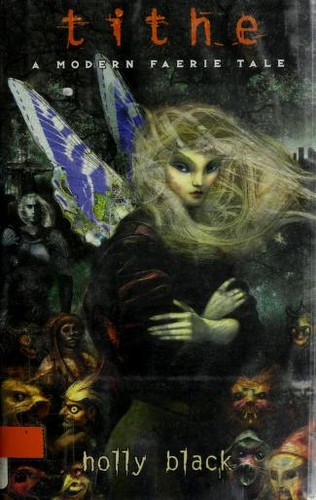
But as a child, I was quite a happy bird when it came to books, and the books I read then still influence me now. The Abhorsen Trilogy by Garth Nix and Tithe by Holly Black have been extremely formative for me for the type of fantasy I aspire to create. They were written decades ago, but still remain quite subversive in the modern Game of Thrones-dominated landscape of fantasy. Nix’s series features teenage girls using necromantic bells to raise the dead or lay them to rest in the process of saving the world. Black’s series is a keystone of urban fantasy since the modern setting is used as urban grit, and the otherworldly aspects remain brilliantly ethereal, with such majesty that gets lost in what most people think of as urban fantasy: the fantastical made mundane through such things as Paranormal Investigation Agencies and vampires going to high school.

I’ve kept tabs on what the big boys of publishing put out, and there’re some trailblazers for QTPOC in fantasy, namely TOR, but I can’t help but keep my reservations. The publishing world is a lot different now than it was 15 years ago, but is different enough? Is change happening fast enough? For some, it is. And I’m happy for them.

But if I had to have my say, I’ll stick to my childhood favorites and the wide and well-tagged world of fanfiction.


Xuan Nguyen | FEYXUAN is a disabled fey orchestral music composer, writer-poet, and illustrator-designer. Their recent projects have involved the solo development of aesthetic interactive fiction games exploring the nuances not exclusive to the following: power, trauma, madness, nonbinariness, divinity, and monstrosity. LIAR, LIONESS (Feb 2021) and the demo for OCHITSUBAKI【落ち椿】(March 2021) are out now. Their books include LUNG, CROWN, AND STAR (Dec 2020, Lazy Adventurer) and THE FAIRIES SING EACH TO EACH (Feb 2021, Flower Press). Xuan Nguyen is the Art Director of Lazy Adventurer Publishing, and they help Grimalkin Records as a Graphic Designer.

Project Bookshelf: Lee Anderson

I once organized my aunt’s library room by color when I helped her move, sweeping ROY G BIV around black shelves and bubble-wrapped packages I was expressly warned not to touch, much to her irritation. I was young, so I didn’t quite understand how or why that might be annoying, but now that I have bookshelves of my own to place, it makes more sense. I have three wide rows of a living-room-turned-office bookshelf that I share with my girlfriend sorted by genre: notebook, cookbook, scientific nonfiction, creative nonfiction, fiction, and poetry. In a perfect world, each genre would be organized by the author’s last name, but I once forgot how many letters are in the alphabet while I was teaching, so that dream hasn’t been realized just yet. For the most part, this system works. I do love that most of the books I’ve found and adore have brightly-colored covers. They are little gems, bright pops of jewel tones nestled together like the world’s best literary supermarket.

Most of my favorite fiction novels have been passed down to my youngest sister, a bookworm after my own heart, but I’ve kept a few close to me—a collection of Kurt Vonnegut’s best gifted to me by my childhood best friend, Aristotle and Dante Discover the Secrets of the Universe by Benjamin Alire Sáenz—and am regrowing my collection as I stumble upon more. I’m always trying to find and read more creative nonfiction, and gems like Sarah Minor’s Bright Archives that play with form are what keep me going as I test out my own form-based experiments in essays. My sort-by-genre system has been falling apart the more I learn about and invest in non-traditional literature, however. Where does a hybrid chapbook go? What about an essay collection that braids pedagogy with real science? If it exists outside of formal constraints, does it have a home? I don’t have a solution for this yet, as silly as that sounds. I’ve been trying to make gradients between genres, like one big loop, where teal fits between green and blue, and it’s both working and not.

To the right of my desk, opposite the big bookshelf, are two floating shelves. My “academic bookshelf” lives on the bottom. This is where I keep books that I’m actively reading (Something That May Shock and Discredit You by Daniel Lavery) that aren’t on my bedside table (currently The Collected Schizophrenias by Esme Weijun Wang), composition and rhetoric books I’m teaching, and books that I need for my own MFA classes. Right now, most of these books are for my thesis—Queer Phenomenology, Pale Blue Dot, Assuming a Body, and more—whether I am drawing inspiration from their form, style, or simply trying to wrap my head around the theory. The “dog” plant pot and tiny hand are for keeping the books upright and me smiling, a simultaneous bookend and serotonin slot machine. The shelf above keeps my mug collection in one place, because what is an office corner if not also a coffee station? I use my mugs as decor, in teaching my freshmen about twisting genre and tone, and for their standard purpose as drink vessels. If I think about it hard enough, they become part of my bookshelf gradient, tying the corners together by wrapping up all of my loose ends.

I keep two books on my desk with my darling marble queen pothos, color-coordinated calendar, and peach rings always in reach. Despite not being a poet, the beauty of poetry is so concentrated that it is my favorite way to re-inspire myself. Mary Oliver is one of my all-time favorites, and her anthology Devotions has enough familiar and new material that opening to a random page, reading the poem(s), and sitting with the images for a few moments is enough fuel to keep me going on long nights. I’ve done this recently with torrin a. greathouse’s new release Wound from the Mouth of a Wound and Clementine von Radic’s Mouthful of Forevers, too.

If poetry can’t save my writing brain when the wiring is faulty, though, my tarot cards can. I have a deck themed after the 2013 movie Pacific Rim, each card painted by a different artist, and take a moment, shuffling them through my hands, staring up at my big bookshelf until it feels right. I draw a card, read the interpretation from Michelle Tea’s fantastic Modern Tarot, and watch how adjusting the placement of my perspective gives me the opportunity to try again.


Lee Anderson is a nonbinary MFA student at Northern Arizona University, where they are the managing editor of Thin Air Magazine. They have been published sporadically but with zest, with work appearing or forthcoming in The RumpusColumbia Journal, and Back Patio Press.

Project Bookshelf: Eliza Browning

My bookshelf is an assorted jumble of the books I’ve accumulated throughout the years from a variety of different sources, representing my shifting tastes and needs through high school and college. A revolving collection split between my home bookcases and my dorm room shelves, my books often undergo frequent purges and additions to compensate for limited space. Borrowed library books, a few old favorites, novels for English classes, and textbooks for my art history major crowd the mantel I use for storage in my dorm, while the rest of my books live year-round in two bookcases at home.

At the end of high school, I purged my bookshelf of most of my children’s lit and young adult books, saving my favorites and donating the rest to Little Free Libraries or my mother’s high school classroom. I retained my favorite books, some which were presents, and literary classics needed for my English major, many of which I inherited from the college collections of my mother and grandmother. I buy most of my books secondhand from the Internet or local used bookstores, which allows me to save money and buy more while purchasing books for class or pleasure. I also collect nineteenth-century books with embossed covers, many of which I find in antique stores or at the Book Barn in Niantic, Connecticut.

Many of my books have come to me by chance, gifted by friends and relatives, foraged from Little Free Libraries, or stolen from unused piles once owned by family members. Before leaving college, one of my friends gifted me almost his entire collection of philosophy and classics, dog-eared and coffee-stained. My collection ranges from classics to contemporary, poetry to nonfiction, theory to memoir, textbooks and Andy Steves’ Europe: City-Hopping on a Budget. I hope to one day have space for my own library in my future house or apartment, allowing my book collection to further expand and grow.


Eliza Browning is a student at Wheaton College in Massachusetts, where she studies English and art history. Her work has previously appeared in Rust + Moth, Vagabond City Lit, Contrary Magazine, and Up the Staircase Quarterly, among others. She is a poetry editor for EX/POST Magazine and reads poetry for COUNTERCLOCK Journal.

Project Bookshelf with Intern Bayleigh Kasper

I’ve always had a fascination with the stories behind the things that hold our stories—that is, the events and ideas that led to a book, the people who created the book, the physical copies themselves, even the shelves that hold the book. To me, every part of the story is important. It’s why I read the acknowledgements in the back of books whenever I can, why I remember where I bought a book or who gave it to me, and why I remember the details of getting my bookshelves. 

When I was five, my dad added built-in shelves surrounding the windows in me and my sister’s rooms. While hers filled with stuffed animals, boxes of markers, colored pencils, and souvenirs, mine filled with books. I’ve always been quite a book worm. You could hardly find me without one most of my life. So it was no surprise when those shelves got so full of books I had to get another book shelf…and then another. But those first big ones my dad built for me, those first ones I filled with my first books, those will always be special to me. 

The first new shelf I got was a pink metal shelf with pretty detailing on the sides. It leaned sideways just slightly, but it’s still standing. My grandparents gave it to me for Christmas when I was about fifteen—the last big gift I remember them giving me before they moved across the country. The second was a rolling cart I found at an antique store. Everything in the antique store seems to have a story bursting out of it, so how fitting that it would hold all of my favorite stories? I even have bookshelves made of books—not real books, mind you. Just decorative boxes from Hobby Lobby made to look like books I attached to the wall to hold more books and book art. Some have notes in them from friends, one holds candy, another jewelry. I find it very romantic that these books hold special things for me as well as display books and art created from books. 

Being around books has always made me feel at peace, made me feel at home. Book stores and libraries are where I go when I’m feeling stressed or need to concentrate on something. With all the books around my room, it’s one of my favorite places on earth to be. Each one is carefully alphabetized by author last name and stamped with a custom punch which says my name, and I have so many that each shelf is double layered. My bookshelves are something I love to take time to put in order, to clean, and to curate. 

So many of my books have stories behind the physical copies in addition to the ones found inside. There’s Swamplandia by Karen Russell I got from someone I sat next to on a plane because I mentioned I had recently read one of her short stories in a class and loved it. There’s A Mango Shaped Space by Wendy Mass which is missing the front cover due to an incident with spilled bubble liquid. There are books four and five of the Underland Chronicles books by Suzanne Collins which, after buying them three different times, still don’t match the first three (because secondhand book sites don’t always give accurate images). My copy of Bitterblue by Kristin Cashore that has come with me to Switzerland twice. That’s what I love about having books. They’re so much more than the stories the words inside them tell. They’re the building blocks of experiences, real and fictional.


Bayleigh Kasper is a senior creative writing major at the University of Evansville. She dreams of owning a tiny home in Colorado where she can adopt cats, make music, write, and eat very judge-worth amounts of chocolate without actually being judged.

Project Bookshelf: Mary Sims

One of my favorite pastimes to this day is exploring local second-hand bookstores. In middle school, my mom would take me to a small store close to our house, blending our time there with the small coffee shop across the street. My summers were spent rotating between them both and my local library, which was also within walking distance. After all of these years, I can’t count how many books I have bought from that store, but I know it was enough to have filled my childhood bookshelf.

Presently, I still visit that bookstore, and I love it just as much. Perhaps the biggest change I’ve experienced in the routine is the shift in content on my bookshelves. My days of Percy Jackson and John Green were left behind for my growing love of classics and poetry. Woolf and Wilde replaced Rowling; Mary Oliver and Danez Smith took the place of C.S Lewis. My break from middle school was marked by my transition into new genres. I became obsessed with classic literature and contemporary poetry. Kay Ryan’s The Best of It was the beginning collection that steered me into poetry. Even now, the book is still on my shelf, crowded against the more recent collections I’ve enjoyed. 

In taking one look at my bookshelf, my favorites become obvious. Poetry and plays litter the upper shelf, organized carefully so that no author overshadows another. Sarah Kane is able to meet Tiana Clark without distraction and Mary Oliver sits beside Franny Choi in an organized chaos of styles. This shelf is not only important to me because of the community they represent, but because these collections have inspired me to pursue poetry. Louise Gluck’s The Wild Iris introduced me to the importance of movement within a poem. I would spend my time reading this collection between my classes and job, marveling at her ability to shift within her stanzas; I remember sitting out on my university library’s steps and highlighting lines in the sunlight.

In addition to Gluck’s collection, Kaveh Akbar’s Calling a Wolf a Wolf is one of my most treasured books. This collection was my gateway into contemporary poetry as it showed me how to love poetry in all its different forms. I was fortunate enough to get it signed in January and keep it displayed proudly. Sitting beside Akbar’s poems is another one of my more recent purchases: Franny Choi’s Soft Science. This collection taught me the imperative role form plays in conducting the message of a poem. Beyond what I have learned from it, this collection holds a special place in my heart as it contains one of my favorite poems: Introduction to Quantum Theory. The first time I read this poem, I felt the world around me melt away. Predictably, reading Soft Science had the same effect as I tore through it. 

Many other notable books I still find myself enraptured by are Richard Siken’s War of the Foxes, Araclis Girmay’s Kingdom Animalia, Sarah Kane’s collected plays, and Hieu Minh Nguyen’s This Way To The Sugar. Siken’s collection was a gift I received two Christmases ago after I had devoured his first collection Crush in under a day. His ability to condense emotion into action devastated me, and I simply had to have more of it. The relationship of the speaker and the reader seemed foundational to Siken’s emotional construction. Oftentimes, his poems gave the impression of an intentionally fragile structure, waiting to be torn apart. Similarly, Girmay’s collection is one I had on my list for a long time. I finally purchased my copy for a directed study course I took with one of my favorite professors. As expected, her collection was hypnotic. I was fixated on her use of images to place her reader into each poem as well as remove them just as quick. Her ability to deconstruct interaction within her own work was breathtaking, and I couldn’t tear myself away.

This past fall I was able to visit with family friends in Seattle, Washington — one of my favorite places to be — where I picked up a copy of Nguyen’s book at a local bookstore I come to each time I’m in the city. I carried his collection across the city and then over the ocean as I started to read it. Of course, it’s no surprise how quickly i became immersed. Nguyen’s use of careful violence in each poem entangled me, leading me to continuously marvel at each image he crafted. Sarah Kane’s plays were something I discovered indirectly, but I am very glad I did. Last summer I came across her work in a short quote shared by a book-review blogger I follow. I was so entranced; I hadn’t read many plays outside of school assignments, and I wanted to correct that. I ordered her collection, finishing the whole thing in two days. I was torn apart; I was resurrected. There is no other way to describe how I felt reading her work.

My second shelf is a little more disorganized, which also reflects my relationship with fiction. There is a blend of university assigned readings, high school fascinations, and ‘to-read’ piles all pressed together. This shelf contains my collected fiction and non-fiction. Writers like Jamaica Kincaid and Bram Stoker meet each other within the chaos. Last year I became very invested in non-fiction; I picked up the exploration that was Cat Marnell’s How to Murder Your Life and snowballed from there. On my bookshelf is one of Terry Tempest Williams’ books Refuge, which continues to inspire me even a year after my first reading. I was stunned by her ability to blend dreamscapes with reality while remaining within her non-fiction genre. The structure of each realization throughout was framed by a careful preciseness, leaving the reader with a constant impression of standing at the edge of a cliff and refusing to look directly downwards. 

My love for fiction fluctuates between fixation and fascination. During my sophomore year of university I set a challenge to read fifty books I hadn’t read before. J. D. Salinger’s The Catcher and the Rye was something I had been recommended by a friend in passing and thus became the first on my list. Though the novel is surrounded by controversy, it is still one of my favorite classics. Stream of consciousness is something I lean heavily towards — my annotated copy of Woolf’s Mrs. Dalloway speaks for itself — so it may come as no surprise that I found Holden Caulfield’s narrative intriguing and relatable. Lastly, lying beside Catcher in the Rye is another classic that influenced me heavily— Oscar Wilde’s The Picture of Dorian Gray. I started this novel in high school after one of my best friends recommended it to me; I would finish my classwork early to read it at my desk, glancing over at my friend occasionally as if to say, can you believe this? She would simply raise one eyebrow across the room, and I knew we were in agreement. 

Literature is an imperative piece of the person I am. If I were to explain my personality in objects, books would certainly be a necessary part of the picture. I am sure these pictures of my bookshelf reveal more about me than I have written, but I do hope that the stories I’ve tied to each book help to shape a perspective. I think the most important part in my journey with literature is where it started. I didn’t learn the importance of literature from my school system growing up, but rather I learned it from who I discovered each genre with. I found literature with the people I care most about: my mother and that bookstore, my best friend and Wilde, my coworkers and I arguing over Stephen King’s inability to write a decent ending. 


Mary Sims is an undergraduate writer working towards her BA in English at Kennesaw State University. She is currently a poetry editor for Waymark Literary Magazine and a former student editor for the Atlanta based magazine Muse/A. Her work has appeared in Glass: A Journal of Poetry, The Poetry Annals, Peach Mag, and more. She can often be found filling her shelves with poetry collections, roaming antique stores, or laughing over raspberry cappuccinos with friends.