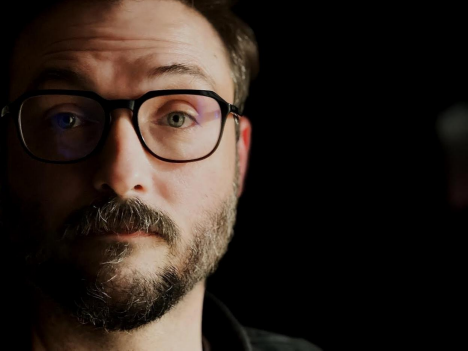
Ahead of the 2025 release of her fourth poetry collection, Unrivered, Donna Vorreyer spoke with Sundress Publications editorial intern Lizzy DiGrande. Here, they discussed the beauty that grows from grief and resilience, the complexities of fertility in humans and nature, and how we learn to live inside bodies and lives that are always shifting.
Lizzy DiGrande: The title “Unrivered ” appears in various forms throughout the collection, such as in “Blood Line,” where you write, “I wanted there to be a rivering, a signal.” Can you talk about what “rivering” means and how you feel it encapsulates this poetry collection?
Donna Vorreyer: There is a reason civilizations were built around rivers. Fresh water for drinking, for cooking, for planting, for animals. Food sources. Transportation. So when a landscape is “unrivered,” through drought or sprawl or natural disaster, everything around it also becomes lost. I started to think about the idea of droughts in a lifetime, how we are drained of certain things that have defined us.
For me, it started with early menopause. My body literally stopped flowing, and the thing that I had been taught made me a woman was gone. And of course, I’m aging and all the fun physical things that come with it, so vitality and youth are ebbing. Then in 2018, I lost both of my parents, to whom I was very close. That loss led to a lot of questioning of the faith I had been raised in. Then lockdown came. Then I retired from teaching, the only job I had ever known as an adult for 36 years. With that retirement also came the loss of relationships I had thought were friendships, but were merely relationships of proximity and convenience. So when I was reaching for a concept, a word that would encompass the feeling of losing the most grounding elements of identity, “unrivered” seemed correct. In the poem you mentioned, “rivering” is a direct reference to menstruation/menopause, but the idea of being unrivered hopefully resonates in multiple ways as a reference to loss in general, to what is drained from you as you age. And so, how does one reroute the waters? Come up with new ways to see the self and the world? You “salvage a self, unrivered.”
LD: Religious imagery is a strong, recurring theme in this collection, as evident in the mentions of transubstantiation, stigmata, apostasy, and even snakes. How has your own relationship with Christianity or Catholicism shaped the way these themes appear in your work?
DV: My relationship with faith changed while caring for and then losing my parents during lockdown, which happened shortly after. I struggled (and still do) with how to reconcile the faith I was raised in with the harsh realities of grief and isolation and global loss. I still find solace in and seek out places where I feel the pull of the spiritual—sometimes in expected places, like churches, and sometimes in unexpected ones, like viewing a bank of clouds or watching the movement of light on water. When the concept of self is wavering or uncertain, the desire to connect or reconnect with something larger than the self becomes very strong. A desire for connection with the divine, however one defines it, can be a grounding force.
LD: In “Coppering,” you highlight Dorothy Hood’s 1977 painting Copper Signal as the inspiration behind this ekphrastic poem. How did you build on this piece of visual art to bring a deeper meaning to it? How is the poem interacting with Copper Signal, and what are you hoping your poem adds to the conversation?
DV: I first saw this painting in San Antonio while attending AWP. The painting is mostly rust/red with a split or chasm of those colors that leads to a jagged brilliant blue that then fades into a deep midnight in the bottom left corner. One of the phrases I wrote in my notebook in the museum that day was “blood-rock/blue-vein,” and the poem builds from a description of the abstract landscape in the painting to a reference to the menopausal body, still “thick with life and howling.” Copper is often associated with blood—the color, smell, and taste—and it seemed like a natural progression as I drafted the poem. There is also a deep rift in the painting, something divisive that separates one side of the canvas from the other. To me, that seemed like a clear image of a breakage, a major change. I don’t know if it adds anything to the conversation about Hood’s painting. I only know how it felt to me in that moment.
LD: In your acknowledgements, you mention how Waterfall Glen Forest Preserve in DuPage County, Illinois, almost plays a character in many of these pieces. How has this place worked to ground your poems and shape the collection?
DV: I love being outdoors (though not sleeping there—I’ll hike all day, but I want a bed and walls at night). We are lucky to have a 2500-acre forest preserve about a mile from our home, and it is the place where we most frequently walk (and, during the pandemic, the only place we went outside the house). After spending hours and hours there, I continue to make discoveries (like a small waterfall whose force varies with the weather or a gully that looks like the perfect place for someone to die in a Decemberists song). I also continue to be delighted by its small pleasures—a family of deer running across the trail, the mosses that grow on the rocks, the thunderous frogsong in the spring. A forest is also the perfect place to observe a constant state of change and cycles, a type of reinvention that mirrors the changes and cycles of aging in the book.
LD: In “I Contest My Body’s First Eviction Notice,” you break words across lines, even starting a new line with a singular letter from the previous word. How does intentional fragmentation work to reflect this poem’s subject matter?
DV: I remember that I wanted those fragmented lines to be able to be read in two ways, for the reader to think, “Wait a minute, I thought it was this, but it’s this.” The mid-word line breaks move the meanings from broad to more specific. The stairs are a subtle swell, but then, oops, they cause swelling. The damage can refer to the body as a whole, but the addition of the d on the next line allows it to be a specific part that is damaged. There is a sort of disorientation when the body starts to refuse tasks that used to be easy or starts to exhibit new and troubling symptoms. I wanted to try and mimic that confusion with the structure of the poem. And I do love a poem that resists being read aloud, that wants to be seen on the page.
LD: There is tension between the idea that one’s imagination remains fertile, but the physical body is barren. How has this juxtaposition shaped your own sense of identity? What do you hope readers take away from this concept and its relation to womanhood and resilience?
DV: I think that tension is true for anyone, regardless of gender. Everyone has a body, and every body ages, though aging as a female brings different expectations from the world, particularly regarding appearance and worth. And the imagination can be both a refuge and a very unwelcome generator of maybes that can make reality seem even more difficult. So I think that specific word as it relates to the book, to being unrivered, is more related to losing a sense of usefulness, a sense of purpose, a sense of value as a person in the world, and imagination is key to seeing new versions of a self that has changed. I would hope that readers see themselves somewhere in these poems and know that they are not alone in their self-criticism and their raging against time, but also not alone in their turn toward what is beautiful, toward desire and joy.
LD: The concept of “dropping breadcrumbs” is scattered throughout the collection. What does that image mean to you, and why do you think it recurs?
DV: That image appears three times because it is the last/first line in the heroic sonnet crown that anchors the collection. Thus, it is an ending line in one sonnet, a beginning line in another, and then an internal line in the final sonnet that finishes the crown. The image of dropping breadcrumbs, of course, comes from Hansel and Gretel leaving a trail to follow back home. In reality, dropping breadcrumbs in a forest wouldn’t work as birds, insects, and animals would make them quickly disappear. So dropping breadcrumbs became, in the crown, once a mundane image of cooking dinner and twice a metaphor for a flawed tether to past mistakes, a false belief that one can go back and somehow change what has already happened.
LD: There are so many strikingly vivid images in this collection, such as a student carrying a lemon in his pocket, and “the intricate lace edges of kale mapping an unknown coast.” Are these images derived from observation, imagination, or a mix of both?
DV: I think it’s always a mix of both. I taught middle school for thirty years, and the lemon in the pocket was a real thing. (You don’t want to know what other things were kept in some pockets, trust me.) But the placing of it in that poem came from a flash of that memory out of nowhere, a way to connect a past experience with a certain state of mind I was trying to convey in the poem. All writers are observers, but just writing a pure description or narration of an image or event is not a poem. Observation and extrapolation combine to make the most memorable images, I find.
LD: Different sections of this collection touch on topics ranging from grieving the loss of parents, menopause, body dysmorphia, and more. Is there a significance to the order of these sections, perhaps to suggest growth in the writer?
DV: When I ordered the collection, I knew I would be splitting up the sonnets in the crown, so I first chose poems that seemed to connect to each individual sonnet in some way. (A reader may see repeated themes or diction or images, for example.) But the arc of the collection as a whole moves from grief, confusion, and fear to acceptance and rediscovery. This is not to imply that confusion and grief and fear end, but more to recognize that they have become a part of learning how to continue to grow and find joy. The heroic crown as a form is both propulsive and recursive, moving forward by throwing back to a line from the previous sonnet, and then bringing back all of the first lines at the end. Life is the same way. It is always moving forward, even while it is looking back.
Pre-order your copy of Unrivered today

Donna Vorreyer is the author of four full-length poetry collections: Unrivered (2025), To Everything There Is (2020), Every Love Story is an Apocalypse Story (2016), and A House of Many Windows (2013), all from Sundress Publications. Her poems have been nominated for multiple Pushcart and Best of the Net Awards. Donna has also published seven chapbooks, including The Girl (2017, Porkbelly Press). She currently lives and creates in the western suburbs of Chicago, runs the online reading series A Hundred Pitchers of Honey, and is the co-editor/co-founder of the online journal Asterales: A Journal of Arts & Letters.

Elizabeth “Lizzy” DiGrande is a graduate student in Emerson College’s Publishing and Writing program, where she also serves as a Transformational Leaders Fellow and Writing Assistant for the Emerson Grad Life Blog. She is on the board of the Women’s National Book Association, Boston chapter, and is passionate about amplifying women’s voices in publishing. Originally from New Jersey, she now resides in Boston and can often be found perusing the city’s public libraries or exploring new restaurants. She hopes to build a career as both a food writer and literary agent championing female-identifying authors.