Sundress Academy for the Arts Announces Winners of Fall Fellowships
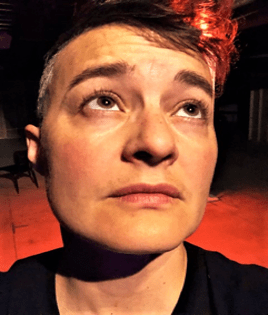
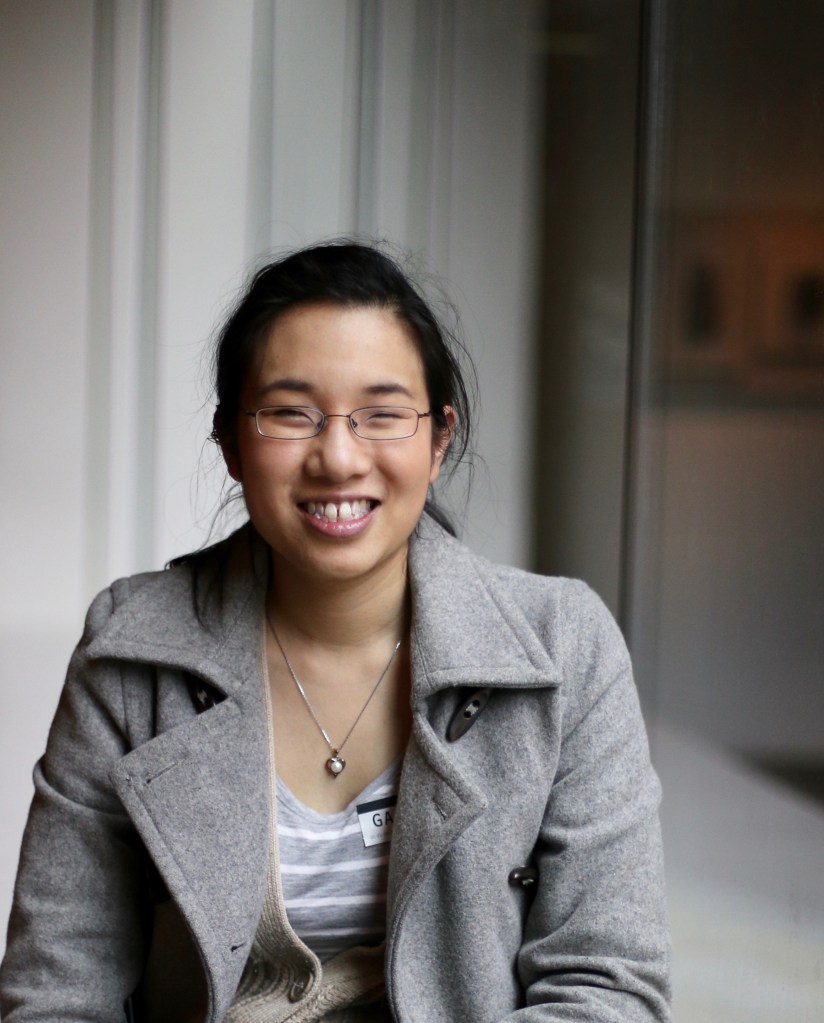
The Sundress Academy for the Arts (SAFTA) is pleased to announce Ashia Ajani, Juliana Roth, and Austyn Gaffney as the winners of fellowships for fall residencies. These residencies are designed to give artists time and space to complete their creative projects in a quiet and productive environment.
The two winners of the VIDA Fellowships are Ashia Ajani and Juliana Roth. Austyn Gaffney has won this fall’s Writers Coop Fellowship.
Ashia Ajani (they/she) is a Black storyteller and environmentalist hailing from Denver, CO, Queen City of the Plains. Her work explores the layered relationship between the Black diaspora and Western environmental stewardship. They have been published in Sierra Magazine, Sage Magazine and Foglifter Press, among others. They are a 2019 PEN America Writing for Justice Finalist. She released her first chapbook, We Bleed Like Mango, in October 2017.
Juliana Roth‘s writing has appeared or is forthcoming in VIDA Review, Irish Pages, Reckoning, Yemassee, among other publications. She was twice nominated for the 2018 Best of the Net Anthology and was a 2019 Publishing Fellow with the Los Angeles Review of Books at the University of Southern California. Roth earned her B.A. from the University of Michigan and her M.F.A. in Creative Writing from Rutgers University–Camden. Her work as an artist has been supported by the Network of Ensemble Theaters, the Community of Writers, and Orion Magazine’s Environmental Writers Workshop. Screenplays by Juliana were selected for the Atlanta Film Festival, the Austin Revolution Film Festival, the Socially Relevant Film Festival, and the Lady Filmmakers’s Festival. She is the creator of the narrative web series, The University, which follows the bureaucratic failures of a university in the aftermath of a sexual assault on campus. Currently, she serves as Chief Storyteller for Edward Hopper Museum & Study Center and works on a variety of projects for Notch Theatre Company, Rivertown Film Society, and Leftfield Productions.
Based in Kentucky, Austyn Gaffney is a freelance journalist covering agriculture, energy, and climate change. Her work has appeared or is forthcoming in Grist, The Guardian, High Country News, HuffPost, In These Times, onEarth, Sierra, Southerly, Vice, and more. She’s received support from the Economic Hardship Reporting Project, Institute for Journalism and Natural Resources, Kentucky Arts Council, PLAYA, Brush Creek Arts, and Writing by Writers, among others.
Sundress Academy for the Arts editorial intern Emma Hudson asked Randon Billings Noble questions about her essay collection Be with Me Always. With an epigraph from Wuthering Heights to set the tone, Noble’s essays are centered around feeling haunted. Haunted by past relationships, past experiences, and even by thoughts within the self, Noble finds a way to piece these themes together through a variety of forms. These essays come together like compartments of a heart—one that beats with each word, swelling with strong emotions.
The collection is divided into six parts with four to five essays each. In the first part titled “Whatever Bed” Noble explores hauntedness within the self from adrenaline-inducing experiences to glimpses in the mirror. “Shadows and Markings” includes essays reflecting on the memories of the past and the marks of recent times, showcasing how thoughts and physical proof of memories can cast a shadow and mark the mind. These physical and internal manifestations of haunting are explored further with each essay and dissected by insightful biology, history, and literature references.
EH: Would you say you landed on the Wuthering Heights epigraph or that your autobiography took roots from it in terms of theme?
RBN: I had written a lot of the essays for Be with Me Always before I wrote “Striking,” which uses part of that line from Heathcliff: “Be with me always—take any form—drive me mad! only do not leave me in this abyss, where I cannot find you!” As soon as I read that passage I thought, yes—that’s how I feel about hauntedness – and memory. And it became the title for the book.
EH: What inspired the organization style you used for your essays from the main headings to the essays included in each section?
RBN: Although the essays are loosely themed around hauntedness, they vary greatly in both subject (a near-death experience, looking at a nude model, Anne Boleyn’s doomed relationship with Henry VIII, Stonewall Jackson’s amputated arm) and form (traditional, lyric, braided, hermit crab). So I tried to group them so that they could talk with each other. I also tried to keep a loose chronological order—putting essays where I’m younger earlier, essays where I’m older later—and to have some of the weirder forms early on so the reader wouldn’t be surprised coming across, say, “Vertebrae” (which is written in the form of a spine) later.
EH: In your essay “Split” there’s a fascinating discussion with how the self is split and lingering. What do you think the split-self represents, especially in light of hardship?
RBN: I think it’s something of an internal safety mechanism that releases when we’re confronted with sudden trauma. In my case, the split self was triggered by a near-drowning and, years later, a motorcycle accident. In both cases, part of me was struggling but another part of me was watching, waiting, witnessing—attending. The presence of this other self was calming. It seemed to point to something larger than the fear or pain that I was experiencing in the moment. The split self feels like “a small piece of mystery within us” that we carry almost secretly until it is needed.
EH: The theme of “the self” comes up in a variety of forms from internal to external, to parts that are taken and given. What do you think is the most crucial aspect to understand about “the self”?
RBN: There isn’t really just one self. We’re always contradicting ourselves, surprising ourselves, doing what’s easy instead of what’s right, or making unexpected sacrifices to our ideas. We indeed contain multitudes. And remembering that—really understanding that—might be the most crucial aspect to understanding “the self.”
EH: In “The Sparkling Future” the essay drives home your literary influence and amazing tactic you have in how “we cast ourselves in the roles of characters, plotlines, and critics…” Do you find there is something special or maybe even worrisome about drawing such comparisons?
RBN: I’ve always read books to try to figure things out. It’s like dipping into an enormous conversation that’s been going on for 3,000 years and across six continents (and maybe Antarctica too). Is there something special about drawing such comparisons? It’s hard to say because for me it feels quite normal. I can see how some of it might seem grandiose. But thinking in metaphor is always some kind of reach. Is it worrisome? I suppose it depends on what literary lives you see yourself living parallel to. Certainly, Anne Boleyn was a dangerous one! … Interesting: I almost wrote “dangerous model”—but she wasn’t a model for me. She was a possible parallel path for only one aspect of my life and only for a little while. Thankfully, I kept my head.
EH: How would you describe your process for essay writing? Did it tend to stay the same throughout writing Be With Me Always or vary from essay to essay? (This question came to mind after reading “69 Inches of Thread, Scarlet or Otherwise” with the last two points in mind).
RBN: I almost always start with a question or an observation, a moment that confuses me, something that I need to figure out. I usually tell the story of whatever that is – what I saw or heard or thought or felt—and then add someone else’s story or thinking to help me puzzle it out.
“69 Inches” started differently. I had been asked by a literary magazine to write something about Sherlock Holmes’ A Study in Scarlet for an upcoming themed issue. I thought I would write a straightforward essay about my relationship with the book, my love of Jeremy Brett, my desire to be a spy when I was a little kid. But when I read that line about a “scarlet thread of murder running through the colourless skein of life” I wanted to consider my own life and what its scarlet thread might be. I felt that my “duty [was] to unravel it, and isolate it, and expose every inch of it.” And so I started writing those inches. Later I realized there were around 70 of them so I consciously made it 69—one for each inch of my height.
I was worried when I submitted the piece—it was not at all what I thought they were asking for—but they loved it.
EH: Overall, what was your favorite line from one of your essays and why?
RBN: I love the last line of “Striking” because it sums up the pull I feel between my past and my present lives. It needs a bit of a running start:
“Be with me always,” I think of the things that haunt me, the love of my young life, the places now lost, the mistakes I have made and the mysteries I will never solve. Outside my moving car are shadowed yards and black fields, houses with dark windows or only one upstairs light on. Most of the living I pass are sleeping. And the dead—who can say?
I’m driving home to those I hold dear, but I’m not there yet.
I also love the end of “The Sparkling Future.”
I sat watching the Thames rise with the tide, and I knew the tears would come, not now but soon, and that the loss would hit me, not hard, but hard enough to remind me that sometimes, not always, you get nothing. But sometimes nothing is better than forever. Anything is still possible.
The last line speaks for itself: Even when haunted, even when committed, anything is still possible.
Randon Billings Noble is an essayist. Her collection Be with Me Always was published by the University of Nebraska Press in March 2019, and her lyric essay chapbook Devotional was published by Red Bird in 2017. Other work has appeared in the Modern Love column of The New York Times, The Rumpus, Brevity, Creative Nonfiction, and elsewhere. Currently, she is the founding editor of the online literary magazine After the Artas well as the editor of an anthology of lyric essays forthcoming from Nebraska in 2021. Her next book is a lyric meditation on shadows, forthcoming from Nebraska in 2023.
Emma Hudson is currently a third-year student at the University of Tennessee working on her double concentration BA in English: rhetoric and creative writing, along with a minor in retail consumer science. She’s a busy bee; she is the Editor-in-Chief of the up-and-coming Honey Magazine. Emma is also a long-time member and leader in UTK’s Creative Writing Club and on the Executive Board for UTK’s Sigma Tau Delta-Alpha Epsilon chapter. In her free time, she figures out how to include K-Pop group BTS into her research projects and watches “reality” tv shows.
Hello, and thank you for joining us again for Lyric Essentials! This week, we are pleased to hear from Amanda Gomez, who reads poetry from Miguel Hernández to us and chats about viewing poetry as a tool for hope and teaching literary citizenship through exposure to diverse writers. Thank you for reading!
Erica Hoffmeister: Why did you choose these two particular poems by Miguel Hernández to read for Lyric Essentials?
Amanda Gomez: Despite the fact that Miguel Hernández is one of the most popular 20th century Spanish poets, I am very new to his work. I purchased The Selected Poems of Miguel Hernández, edited by Ted Genoways, last year, but it was not until this spring that I began to read his work. It seems easy to say that I chose to read Hernández work because I have just recently finished reading his work, but I think it is his urgency that compels me. With everything going on around us, the pandemic and the ways in which it has exacerbated the inequities of our systems, police brutality and the murders of innocent Black lives, systems of oppression that continue to exist, I wanted to return to someone who has come before, and Hernández is that person for me at the moment. Hernández fought for the Republican side in the Spanish Civil War, and both of the poems I decided to read were written by him from jail after having been imprisoned by Francisco Franco.
The first poem I chose, “Lullaby of the Onion,” was the very first poem of Hernández’ work that I was introduced to, and it is probably his most well-known poem. Hernández wrote the poem in response to a letter from his wife in which she details how she and their child were starving, and the child was malnourished having only onions and bread to eat. Hernández resists despair throughout this poem. It is not just a love poem, but a political poem: he illustrates the poet’s work is not simply to witness the moment but to reimagine a new future.
The problem with imagination, however, is that it’s rooted in our bodily experiences, and if left unchecked becomes dangerous, which is why I’ve also chosen “The World is as it Appears.” Here, Hernández’ hopeful tone is more restrained. In one line he writes, “[n]o one has seen us. We have seen / no one,” highlighting the ways in which we flatten the identities and experiences of others and conflate them with our own, reducing our capability for compassion and empathy. And while this is human error, I think we could interrogate this idea further as to how power interacts with these moments. For instance, I am reminded of D. L. Hughley who said, “The most dangerous place for Black people to live is in White people’s imagination.” I am fearful that we as a country will continue to remain blind, “blind as we are from seeing,” as Hernández ends the poem. But if there is some consolation, it is that “[i]t takes work and love / to see these things with you.”
In choosing these poems, I wanted hope for the future. Hope for now, but I can’t see that hope being viable without looking back to the past.
EH: In our emails, you mention Don Share reading his translation of Miguel Hernández’ poem “Lullaby of the Onion” as your introductory point to Hernández’ work. What about that experience of hearing that poem aloud resonated with you so deeply?
AG: Listening to Don Share read the poem was enthralling for me. I can remember exactly where I was and what I was doing, which was driving in my car, and just as he began the poem, I was parking in a gravel parking lot outside of a local coffee shop. I could not get out of the car until I had listened to the entire poem on repeat multiple times.
I am drawn to people’s voices. A speaker’s intonations and pauses are just as interesting to me as the words. In the act of listening, I am learning about the writer and the speaker, and sometimes those identities are shared in the same person and sometimes those identities are shared by two different people, but I find listening an erotic act. I can’t imagine anyone reads the same poem the exact same way every time. We linger in places that hold our attention more, and those places speak to us at very finite points in time. So for me, I could hear the nostalgia in Share’s voice in the places his voice warmed, knowing he’d read it many times.
However, I will admit that while listening to the poem was a great moment, reading the poem was a very lackluster experience the first time. It took multiple readings for me to come to my own appreciation and understanding of the poem.
EH: Has Hernández’ work influenced your own writing in some way?
AG: I would still say I am new to Hernández’ work, so I can’t exactly say how he has influenced my writing directly. I can say that Hernández’ imagery has stuck with me. He ends his poem “A Photograph,” by saying, “a picture accompanies me,” and I enjoy how much weight he places on the image. In one poem, there are “rustling eyelashes of the canefield,” and in another poem, “there is an orchard of mouths.” It is hard not to walk away from one of his poems without remembering these phrases, reminding me to always continue to invent new ways of seeing everything around me.
EH: How does your teacher-writer relationship impact the poetry that you read and/or teach?
AG: Being a writer has definitely impacted the way I teach and what poetry I teach. It wasn’t until graduate school that I encountered poets outside of the canon, Latinx poets that I could relate to and identify with, and I think that is such a travesty. I don’t want my students having to wait that long to find authors that look like them. I make it a priority to focus on QTBIPOC writers. I want author identity to be important to my students, though I do worry that my students come to the page to reassert their own opinions or biases rather than to confront them. I try to incorporate as many writers as possible to confront this concern and dialogue with them.
I’m also thinking about ways in which to teach my students the importance of literary citizenship. Many of the writers I choose are contemporary writers because I want them to think about the ways in which art serves us and how we can reciprocate. I also try to maintain some sort of balance between books published by large presses and small presses, so students can think about and talk about access to art as well.
EH: Lastly, is there anything you are currently working on that you’d like to share with our readers?
AG: Yes! My first chapbook, Wasting Disease, will be available in October through Finishing Line Press, and it is available for pre-order now. I am also working on a hybrid work that could probably best be described as lyrical essay. Growing up, most of my education came through television and movies. My parents were fascinated with American lore, and it was always a bit eerie to me. My dad especially loves Western movies, and so the piece is an exploration of John Wayne and his wives, a characteristic someone once described as the most “un-American” thing about Wayne. My primary focus is his second wife, Esperanza Baur, and I want to think through and reimagine her history as it’s hard to see her clearly past the patriarchal whitewash. At least, that’s my opinion.
Miguel Hernández is an early 20th century Spanish poet and playwright who gained fame as a political figure who wrote and read poetry during the Spanish Civil War. The son of an impoverished goat herder, Hernández was self-taught despite being discouraged and abused by his father for wanting to pursue writing. A member of the Communist Party of Spain, Hernández was arrested several times for his anti-fascist views and wrote many of his works from jail, some poems as love letters for his wife. Hernández’ prison poems which were collected and published posthumosly as Cancionero y romancero de ausencia (Songs and Ballads of Absence). Throughout his lifetime, he wrote five books of poetry and six plays. He died in 1942 in prison, at the age of 31.
Amanda Gomez is a Latinx poet from Norfolk, VA, where she received her MFA in poetry at Old Dominion University. Some of her poems have appeared in Nimrod International Journal, North American Review, PANK, Tupelo Quarterly, and Writers Resist. Her chapbook, Wasting Disease, which was awarded 2nd Honorable Mention in the New Women’s Voices Competition, is now available for pre-order through Finishing Line Press.
Further reading:
Keep updated about Amanda Gomez by visiting her website. Read Gomez’ prize winning poem “Grind” in the Academy of American Poets. Read Gomez’ interview of Azar Nafisi in Barely South Review.
Erica Hoffmeister is originally from Southern California and earned an MFA in Creative Writing and an MA in English from Chapman University. Currently in Denver, she teaches college writing and is an editor for the Denver-based literary journal South Broadway Ghost Society. She is the author of two poetry collections: Lived in Bars (Stubborn Mule Press, 2019), and the prize-winning chapbook, Roots Grew Wild (Kingdoms in the Wild Press, 2019). A cross-genre writer, she has several works of fiction, poetry, creative nonfiction, articles and critical essays published in various outlets. Learn more about her at http://ericahoffmeister.com/
Laura Davenport follows up her 2016 chapbook Little Hates (Dancing Girl Press) with a new collection, Dear Vulcan (LSU Press, 2020). Dear Vulcan is a masterclass in patience, simmering with steady heat, passion, and rage but never boiling over.
Davenport tackles a variety of topics in the pages of this collection—there are poems about childhood and family with vivid and invigorating southern imagery as well as somber and stinging elegies and remembrances for late friends—but Dear Vulcan truly shines in its vignette-like scenes of young women navigating relationships and interactions with unsavory men.
The collection’s opening poem, “The Lisbon Typist,” sets the scene for these poems, introducing a woman whose “self is not her self—not hers” and a man, “Your lover [who] wants to be another, / different sort of man. He writes to you from other lives— / doctor, sailor, theologian.”
Aside from stunning, crushing language, Davenport offers here the parallelism of a woman who lacks a self and a man who tries on as many selves as he pleases, an all-too-common power dynamic and one that resonates throughout the rest of the collection.
Take, for instance, “Damsel, 1990,” where the speaker, a young girl, plays the damsel in distress for the neighborhood boys as they play-fight with sticks to “rescue” her. This poem offers a simple story, young boys embarking on a heroic quest in their own backyard and, viewed through a particular lens, that might be all you see. But Davenport pulls the camera back, pans over, and shows us a young girl being socialized into a subjugated role from an early age. This idea and the imagery associated with it are revisited later in the collection, in the poem “Notes from My Other Life.” Here the speaker reads an old poem about the siege of a village and finds herself laboring through the tired masculinity of the piece—its emphasis on violence, the objectification of the few women present. Already, we are imagining the boys playing knight in their backyard, the girl they’ve delegated as their prize.
The speaker describes the poem as a lecture, long and slow. “It’s hopeless,” she writes, “but then / the second author intervenes, / the girl who owned this book / forgotten semesters ago.” As the speaker reads these marginal notes, she feels a kinship with this other girl (who, according to the title, may have been an earlier version of herself). In these notes, the speaker finds that the girl, too, found these poems at best a slog and at worst blatantly misogynistic. The girl is simultaneously another reader, bearing the through the lecture of the poem along with the speaker, as well as a co-author, her notes expanding the poem, critiquing it and casting a light on its faults. Annotations and additions expand the story of the poem, showing the speaker a different perspective, just as Davenport offers us a different perspective in “Damsel, 1990.”
The subject matter of these two pieces adds to this effect, too. When we imagine children playing knight, we imagine young boys and, of course, they are the knights. And when we imagine knights themselves, we imagine men. As either a result or a cause of these imaginings, the written accounts of these events center a masculine perspective and push women to the side.
Davenport reclaims those narratives, not by inserting women into the story as knights and pretending there was never a masculine center to our stories, but by shining a spotlight directly onto that very centering, asking us to recognize it in ourselves and challenge it.
This is a highlight of Davenport’s style—her patience and masterful pacing.
These poems confront sexual assault, harassment, objectification, and a mountain of other obstacles women face every day and any of these events in isolation is just cause for anger, for boiling rage, but Davenport’s poems are calm and thorough in a way that invites us into these scenes and into the anger. Rather than handing us her anger and asking us to look at it, Davenport walks us to a place where we discover our own anger and are compelled to reckon with it. Davenport’s style represents the difference between watching someone cry in a movie and having a movie bring you to tears.
These poems also relay a theme of interconnectedness, the events described and the people experiencing them unable to exist in a vacuum. They operate within the narratives of the poems themselves and in the act of reading the poems. These poems don’t appear to convey a single, linear narrative. In fact, it’s unclear if the speaker of these poems is one woman or several—but the events of one poem ripple into another, as seen in the parallels between “Damsel, 1990” and “Notes from My Other Life.” For readers, this ripple effect exists in the build-up of anger, discomfort, and exhaustion.
The men featured in this collection vary in the severity of their actions and comments—one man simply won’t stop talking about his old girlfriend and another mansplains dolphins to a girl on the beach, for example, while others are more threatening, their actions more reprehensible—but when read together, their behavior creates a patchwork of experiences that itself is part of a larger, social system.
When a man stops to mansplain marine mammals, this act is a small inconvenience on its own, but it comes with the context of an endless line of men mansplaining endless marine mammals to endless women. Of course, Davenport doesn’t tell you that, the speaker doesn’t visualize the men who have harassed her before this moment or the men who will likely harass after this moment, but we, as readers, draw the line forward to its various possibilities.
The weight of one man’s comments in one poem makes the comments of another man in another poem feel heavier, the building weight of these endless experiences wearing down both the speaker and the reader. In the poem “Pool Hall,” Davenport explores this, writing “If Hell exists for certain, / it’s this basement pool hall, beers / sweating on the table and men circling / under the lights.” In this poem, the men playing pool talk loudly and crudely about their sexual encounters with women and the speaker feels that part of her Hell in the pool hall is that she feels so strongly the experiences of the women mentioned in these stories.
Their pain is her pain—the way they are objectified and demeaned is the same. Perhaps that is the strongest cord plucked by these poems. While it remains unclear if the speaker of the poems is always the same woman or a variety of different women sharing myriad encounters with men—ranging from uncomfortable to dangerous—but, either way, there is the through-line of shared experience and, once again, the weight of one poem heaves itself upon the next.
Dear Vulcanis a collection that evokes far more than is simply written within its pages, a testament to Laura Davenport’s skill as a poet. Davenport conjures intense emotion reactions and has the confidence to allow those events to occur entirely off the page. This collection is a forceful offering to readers and one well worth seeking out.
Quinn Carver Johnson was born and raised on the Kansas-Oklahoma border, but now attends Hendrix College and is pursuing degrees in Creative Writing and Performances studies. Johnson’s poetry and other writings have been published in various magazines and journals including SLANT, Nebo, Right Hand Pointing, Flint Hills Review, and Route7 Review.
My mama is a writer. A poet. So I’m constantly surrounded by books that aren’t even mine. I’m talking six, full size, double stacked, bookshelves. She organizes them by type: fiction, poetry, travel, western (for my dad), children’s books, etc. So you always know where to find the book you need. And then there is my book collection. It carries the same aesthetic as my mama’s but if you’re looking for one book specifically, you may be searching for quite a while; I just found the book I started last summer. It was on my mama’s fiction shelf.
As disorganized as this beauty is, it’s a good representation of who I am. The shelves are old paintings I made in college and I installed them myself so I guess I was listening when my parents taught me how to find a stud in the wall. It’s made up of mostly female authors with a thick spot of Margaret Atwood and a nod to Tamora Pierce. My childhood heroines claim room on my shelf in the form of Xena: Warrior Princess titles, a Tank Girl coloring book, and a few “how to” roller derby books. These sit happily amid earth bag building, woodworking, human sexuality, and philosophy of human rights. I tried to tell you, it makes no sense. Scattered around the colorful array of spines you can spot porcelain cat figurines, a dragon puppet, a tube of bubbles, and a bouquet of book flowers. More than decoration, these tell the stories of my memories.
I am learning from my mama’s organization, however, because if you turn left, away from my main collection, you’ll find yourself at my drawing table. Here I keep my growing collection of art books. If you look closely, you’ll see a clear expression of my artistic style in the titles of these books: Women, Art, and Society, Impressionists, The Elements of Landscape Oil Painting. You see what I mean?
To wrap up this tour of my reading collection, I present to you my reference books. If you’re a designer like me you just did a little happy dance. These are the books I keep on my desk to offer insight on the history of certain colors, explain to me how I do that series of photoshop adjustments again, and offer me a deep dive into the world of typography (drool). I don’t read these as often as the word “reference” makes it sound, but these couple of books have a way of informing my work just by sitting here on my desk.
From the first time I open my eyes in the morning to the moment I turn out the light, these three shelves inspire my thoughts. They set my mind up to be successful in making conscious choices about who I am and remind me of what is most important in my life. Isn’t it amazing that we can learn so much from them even while their covers conceal the words inside?
Coral Black received her BA in Fine Arts and Fine Arts Management from Western Washington University. She has worked as a graphic designer for InkSpeak and others and most recently completed a custom label for Patron tequila. She works as a freelance designer and artist and is also the kitchen manager for her local YMCA where she cooks 3 meals per day for 75 kids and teachers.
Sundress Publications is open for submissions of pitches for short anthology projects. Anthologies would be published as part of Sundress’s e-chapbook series in 2021 and would be available for free download on the Sundress website. These anthologies would be limited to 50 pages of content including front and back matter.
All editors are welcome to submit pitches for qualifying projects. We are especially interested in projects helmed by or focused on amplifying the voices of BIPOC, trans and nonbinary writers, and writers with disabilities.
Pitches should be approximately 250 words and include:
Potential authors editors would like to solicit
Example pieces of work to be included
Outline of a plan for editorial process
Why editors believe the anthology is important to the contemporary literary landscape
Editors of selected pitches would solicit and read work for the anthology project with Sundress-backed support in submission curation, contracts, proofing, promotion, and design.
To submit, email your pitch (DOC, DOCX, or PDF) to sundresspublications@gmail.com. Be sure to note both your name and the title of the project in your email header. The deadline for pitches is August 31st, 2020.
Ahead of the release of nightsong, their latest collection of poems, Ever Jones spoke with editorial intern Aumaine Rose Gruich. Here, they discussed the poem as prayer and elegy, liberating nature and the body from the constraints of formal language, and working social justice and eco-poetics into the wider project of connection and fluidity.
Aumaine Rose Gruich: The book emerges from a formal time constraint. What was your composing process like in those seven months, and did you know at the time that you were writing a book?
Ever Jones: nightsong was designed as a book of surrender. Formally, I knew that I had to do away with conventions such as titles, punctuation and the left margin. The grip of assimilating into the basic conventions of the English language needed to be liberated so I could find enough space for the poems. nightsong began in a specific moment of tension: The Pulse nightclub shooting in Orlando was among a series of mass shootings quickly becoming the norm, Donald Trump was inciting racist and xenophobic attitudes for political strength, and I was looking directly into the face of my gender identity. I wanted to write a book that thought about marginalization, the body, and connection. As a trans masculine non-binary person who woke up to my gender identity later in life, I survived two decades with no connection to my body. I just sort of ghosted myself. And what’s worse, is that I used my privilege as a white person to do it. It is easy to hide when you are white and cis-ish gendered. nightsong was an opportunity to write a poem each day that collected the ghosts of America’s socially constructed and silently agreed upon oppressions. The stillness of the dark hours made the poems, particularly in the first half of the book, almost like prayers seeking their way into the world.
ARG: Can you speak to the book’s relationship between the body (or bodies), animals, and nature?
EJ: Bodies and nature bear no natural separation, so nightsong springs from that connection. When I need to understand defensiveness, I study plants. When I want to develop my thinking on cruelty vs. survival, I watch a crow decimate a smaller bird’s nest. When I want to understand the fluidity of gender, I lean into a tree. nightsong wanders the territory between natural being and truthless social construction. It does not deny either, but uses nature, animality in particular, to illuminate the nature of inequality and its violent consequences. My body in its basic human nature does not attract violence. But my body under the gaze of social constructions does, through erasure, denial, oppression, and sometimes assault.
ARG: How is nightsong in conversation with, similar to, or dissimilar from the conventions of elegy?
EJ: The elegy is hard to pin down, but at its core is a public and private reckoning with loss. With nightsong, I really wanted to flirt with Susan Griffin’s quote about wildness being “a quality close to death.” There’s an aliveness inherent in wildness, so I wanted the dead to be alive first. I wanted my breasts, which I had at the time, to feel alive to me before I had reconstructive chest surgery. I wanted to feel the burst of life on my tongue even as the blackberry was withering. I wanted the trans people lost during the writing of nightsong to be surrounded with what is alive. This book is elegiac in the sense that it beholds losses; there is no looking away.
ARG: What about the poems’ forms?
EJ: nightsong’s intensity mounted at the time of the 2016 election when Donald Trump was elected president. That was a turning point in this collection, in which the poems’ forms began to pull on their suits so to speak. I felt a bit shocked out of the book’s natural form and expression and could only respond by allowing the poems to take on their heat and stanzas. The aspect of the poem feeling like prayer evolved into a more pressing political lyric.
ARG: Can you speak about the book’s interest in language as it intersects with other themes (the self, the body, nature)?
EJ: Poems in nightsong resist identification, and that is what propels them. The book rests heavily on imagination and new ways of thinking and ecstatic connections. And that resistance to identification intersects with the book’s other themes of self, body, and nature. Those themes want to rest in a wilderness of spirit and aliveness. Words can be stones when misused.
ARG: Can you speak about how the thematic thread of addressing whiteness in both subtle and explicit ways is an essential part of nightsong’s larger project?
EJ: One aspect of social constructions is that they do not live in a vacuum, and neither do poems. nightsong’s project can be said in two words: connection and liberation. These cannot exist without each other unless the desired outcome is escapism. So what does it mean to surge the intersection between trans, privileged as white, and connected to nature? nightsong is a challenge to the nature writer, but is intended as an invitation to reconnect social justice and eco-poetics. We simply cannot continue to tell recycled stories and moral clichés that are based upon colonial principles of privilege—that one person is more valuable than another. Examining whiteness is a way of working into colonialism through the lens of identity. For a white person, you have to work into it, not out of it. Working in is the deconstruction project of nightsong.
ARG: What were difficulties, blessings, or surprises of tackling both love and death in one project?
EJ: To be honest, nightsong feels like a blessing I co-authored with the darkness of night. There is such an intelligence around us. I was blessed to find time to listen for it. I felt like the night’s voice was a vibrational hum just above the activity of daily life. During the writing of this book I lived on a quiet island off the shore of Seattle on an organic farm. The sounds were wild: always life and the temporary sound before its ending. nightsong instilled in me that we can’t feel death without feeling love first. But that love—to really reach out to it—is unbearably beautiful. You cannot hold it.
ARG: How do you hope the book’s one, unified section with nearly all titles taken from the poems’ first lines affects readers in light of the larger project of nightsong?
EJ: I hope nightsong facilitates a feeling of fluidity and connection for readers. Each line required a feeling of vastness to be discovered, and I hope that same space exists for the reader.
Ever Jones (they/them) is a queer/trans writer, artist, & instructor based in Seattle. They are the author of three poetry collections, nightsong (Sundress Publications), Wilderness Lessons (FutureCycle Press), & Primitive Elegy (alicebluebooks). They were a finalist for terrain.org’s 2013 poetry contest and the grand prize winner of the Eco-Arts Awards in 2014. Ever is a Professor of Creative Writing at the University of Washington in Tacoma & teaches at Richard Hugo House. Their most recent publications include work in POETRY Magazine, Tupelo Quarterly, About Place Journal, & other places. Please visit everjones.com to view some art.
Aumaine Rose Gruich is an MFA candidate at The University of Illinois Urbana-Champaign and the Assistant Managing Editor of Ninth Letter. She has received support from the Chautauqua Writer’s Workshop and the Illinois Department of Dance’s Choreographic Platform. Gruich’s work is published or forthcoming in magazines such as Pleiades, Court Green, Phoebe, and Bluestem.
The Sundress Academy for the Arts workshop series is proud to present “Poetry of Stillness.” This workshop will be led by Danielle Hanson on Wednesday July 8, 2020, from 6:00 to 7:30pm ET via Zoom. This workshop is free and open to the public, and you can join us at http://tiny.utk.edu/sundress with password sundress.
A writing experience for people who have been affected by COVID either through work or personal connections, this workshop is designed to focus on a quiet moment and find beauty and peace in something small. Workshop participants will read several peaceful, beautiful poems, and then be guided through writing a poem of their own. No previous writing experience is needed, but even experienced writers should enjoy the time of focus and meditation.
Danielle Hanson is the author of Fraying Edge of Sky (Codhill Press Poetry Prize) and Ambushing Water (Finalist for Georgia Author of the Year Award). She is Poetry Editor for Doubleback Books, and is on the staff of the Atlanta Review. Danielle enjoys gardening and hiking. More about her at daniellejhanson.com.
Sundress Academy for the Arts is a writers residency and arts collective that hosts workshops, retreats, and residencies for writers in all genres including poetry, fiction, nonfiction, journalism, academic writing, playwriting, and more.
Sundress Publications has given space for writers to discuss important topics impacting the literary community. We have hosted roundtables on plagiarism and accountability and, today, we are glad to offer space for a roundtable on publishing.
In this two-part series, editors Sarah Clark (ANMLY, beestung, and Bettering American Poetry), Sarah Feng (COUNTERCLOCK Journal), Luther Hughes (Shade Literary Arts), Iris A. Law (Lantern Review), and Marci Calabretta Cancio-Bello (Print-Oriented Bastards) discuss the ins and outs of online publication and running your own literary journal. While we at Sundress may individually agree (or disagree) in whole or in part with any or all of the participants, the views expressed in these roundtables are not necessarily representative of Sundress Publications, Sundress Academy for the Arts, or any other part of the collective.
What follows is part 2 in this two-part series. Part 1 can be found here.
PARTICIPANTS:
Sarah Clark (SC), ANMLY, beestung, Bettering American Poetry: (they/she)
Sarah Feng (SF), COUNTERCLOCK Journal (Editor-in-Chief, 2019—): (she/her)
Luther Hughes (LH), Shade Literary Arts: (he/him)
Iris A. Law (IL), Lantern Review: (she/her)
Marci Calabretta Cancio-Bello (Print-Oriented Bastards): (she/her)
What kind of obstacles have you encountered along the way?
IL: Probably the biggest one has been life! When we were in grad school, we had so much more capacity to pour ourselves into the magazine. But the shape of one’s personal life changes as one gets older—at various points, we’ve both had demanding day jobs, gotten married, moved around, been busy promoting our own writing (as when my chapbook came out in 2013 and Mia’s book came out in 2018). Mia has two beautiful kids. And with these things have come many more obligations, limited energy, and resources.
I’m in my thirties now, and I can no longer do a string of all-nighters without significant cost to my health. (I still, admittedly, sacrifice a lot of sleep in order to keep up with the work—but it’s a lot harder now than it was eight or ten years ago.) Our solution to this has been to fit LR into whatever shapes our lives are taking at the moment rather than to structure our lives around it. We’ve taken more than one extended hiatus at points when keeping up with the magazine, blog, and/or both felt impossible. We’ve experimented with shifting focus back-and-forth between the blog and magazine. Inevitably, things will change again at some point in the future, and we’ll just have to be ready to pivot and do what we can.
Another obstacle has always been a lack of resources. For example, running LR as a side gig for ten years has meant that we’ve never had the time, contacts, and/or financial resources to develop it into either an actual business or a small nonprofit where we could afford to do things like fundraise, sell merch, and provide volunteers and contributors with some monetary compensation (though we’d love to do all of these things in an ideal world!). So far, we’ve survived by choosing to operate on a shoestring budget (our operating costs consist primarily of web hosting and Submittable fees) and keeping everything very small in scale. But it’s not easy.
LH: Some obstacles I’ve faced along the way deal mostly with finances. Because I’m not necessarily a fundraiser and know little to nothing about stewardship, 90% of everything is paid for out of my own pocket. So if I don’t have the funds to renew the website, the website will go down and has before. Hopefully, since we’re running the Queer Writers of Color Relief Fund, I can cultivate recurring donors, but we’ll see. Fingers crossed.
SF: Like Luther said, finances are difficult, since COUNTERCLOCK is published online for free, and we provide mini-grants to Arts Collective fellows, and we pay for our online hosting. This is covered by donations from our contributors, our expedited feedback service, and our Feedback Corner, and I’m grateful to all the donors, as well as to the editors who have stepped up to help out with the Corner.
SC: Not being able to pay our contributors more is the most frustrating challenge I’ve faced at every project that I’m involved in. So much of the funding just isn’t there. And some of the funding that does exist poses ethical questions. Amazon has been offering some very generous grants, lately. But they’ve also been selling facial recognition software to ICE. Target offers some good money, but has previously funded anti-gay hate groups. Target and Amazon have both been cited for not providing personal protective equipment and other protection during the coronavirus pandemic.
I’ve also made the decision to take down contributors’ work when it came out that they were abusers. I won’t say for which projects, because these aren’t my stories to tell. But I don’t want to support the work of people who hurt other people. I recently asked the editor at DIAGRAM if he had any plans to take down work by a man known for sexually harassing dozens of women, who even had a restraining order taken out against him. This editor was baffled by the very concept of taking down work that’s been published online, and went so far as to say that his magazine was just like a print magazine, so he couldn’t take the work down. He absolutely could have, and DIAGRAM shouldn’t have decided to give publicity to a known predator.
MCCB: We didn’t realize what a huge time commitment this would be. As Iris mentioned, we had much more time and energy to dedicate to this in college, and later in our respective MFA programs. However, we found that POB was also taking a lot of time away from our own writing to dedicate to POB. We finally made the difficult decision that, after 5 years, our 10th issue would be our last. Inés and I were at specific points in our lives where we had to realign our focus and energy. So many other journals have popped up online that we weren’t worried about filling a gap anymore. We can celebrate others’ work in such different ways now because of how the literary world has developed. It felt right to end it cleanly at 10 issues. Sometimes I wish we were still going, but I’ve also learned that we can’t balance everything all the time without it costing us something else.
What have been some of your greatest joys as a lit mag editor?
IL: I love following our contributors’ careers! For example, way back in one of our earliest issues, we published a small piece by Ocean Vuong. And, though we’ve had absolutely nothing to do with his success, it’s been amazing to watch his star rise over the last few years. It’s also been so cool to watch contributors whom we published early on in their careers—like Michelle Peñaloza, Rajiv Mohabir, Eugenia Leigh—go on to win awards and publish books. Equally as awesome is seeing a poem that we published pop up in a contributor’s book. It’s often a complete surprise. I’ll just be reading the book and then suddenly come upon a poem we’ve published before—or sometimes the contributor graciously reaches out to let me know. But it’s always a thrill every time it happens.
I’m just so grateful to be even a small part of a vehicle that is enabling APA poets’ work to be heard on the literary stage. Providing an opportunity for representation—for our contributors to be read on their own terms—is a task that feels absolutely vital to us. It’s why we restarted the magazine in 2019 after having shifted our focus to the blog and newsletter for a few years. Young poets were coming to us at events, asking us when we were going to start taking submissions again, and Mia and I realized that, in some ways, the magazine is even more important than the blog—because it’s a space in which we can highlight new and emerging writers’ work alongside more well-known writers. It’s a question of carving out and protecting a space for them to be heard. It’s a lot of work, but it’s so rewarding and humbling to get to see what happens when we continue to keep that space open.
LH: My greatest joy as an editor is the writer getting the love they deserve from the greater literary community. Nothing makes me happier to see than people sharing work that was published in Shade, and seeing the writer exclaim their happiness. One particular example that comes to mind is when Tracy K. Smith shared Julian Randall’s poem, “The Space Between Skin is Called a Wound,” on her podcast The Slowdown. Or when K-Ming Chang’s poem, “Yilan,” was awarded a Pushcart Prize. Things like that, getting public and widespread love and support, always reminds me why I love doing what I do and why I started it. It truly puts a smile on my face.
SF: Like Luther and Iris said above, seeing creatives succeed and receive love is so beautiful! When past contributor Khaty Xiong was selected for inclusion in Best of the Net, or when Jamal Michel kickstarted his comic book project IDRISS, or when John Sibley Williams published a new book—these were moments that we cherish.
What makes me the most excited is working with individual writers, conversing with them, and hearing their rationale between different images and structures, asking them to push it further or rework a scene—and seeing a beautiful, living work re-emerge on the other side, slightly different and still shining, alongside my fellow editors. Having conversations with editors, contributors, and staff members is the highlight of my day, since everyone is able to address facets that are the most impactful for them and suggest new improvements.
I hope it’s alright that I’m bending the rules a little bit to say two favorite parts, as the second relates to the Collective, our affiliated fellowship! In the summer, it is so exciting to help lead cohort discussions in the Arts Collective, where I listen in and occasionally guide conversations between the most creative and intellectual interdisciplinary artists who, last year, discussed climate change, the Notre Dame Cathedral’s destruction, Roman gladiators, and everything in-between through the lens of sculptural art, lo-fi music, and more. They may not know it, but I learn so much from them, and I’m thrilled with what they create during the program. The people whom I meet through COUNTERCLOCK are one-of-a-kind, and interacting with them is definitely my favorite part of editing the journal and directing the Collective.
Finally, I would love to include a few notes from my co-editors, since their answers to this question resonate with the heart of COUNTERCLOCK as much as mine do, and their passion and collaboration mean the world to me. From Rachel, our managing editor: “I truly feel privileged and grateful to be able to view everyone’s work as an editor—I know just how personal a piece can be to its writer.” From Ernest, assistant editor: “In providing these fine writers with a platform to sing, to be heard, my joy is unquantifiable.” From Sophie, prose editor: “COUNTERCLOCK submissions are by and large diverse and unique, and the opportunity to work with writers who are all coming from different points in their lives is a thrill.” From Woody, blog editor: “The greatest joy has been empowering and platforming voices besides mine and intentionally shaping the space into an intersectional conversation between myself, other editors, and other writers.”
SC: Lately, it’s been the emails coming into beestung. Not just from young, emerging writers but from all over, at all stages of their careers, thanking me for making a space where they finally felt seen—a space explicitly for them. I have difficulty accepting praise (I can barely take a compliment) but being able to have a journal where writers don’t feel tokenized for their gender and don’t feel shut out for not fitting into a neat compartment? This is one of the best feelings imaginable. Writers and editors often talk about finding a home for their work, and being able to provide that home means everything.
MCCB: Seeing how authors we’ve published years ago have come into their own! We’ve been lucky to have kept in touch with many of them, and to see them win awards and publish books. I remember the joy and validation of those first publication acceptances myself, and would like to think that POB was able to offer that same kind of joy and support to our writers, whether they were fully confident or doubting themselves.
What did you wish you had known when you were starting out?
IL: I wish I’d known how much of a long-term endeavor I was getting myself into! I don’t regret one moment of it, but when we started LR, we had no long-term vision because we were just jumping on an idea that felt urgent and exciting. We sprinted for our first several years of existence, and then we realized we didn’t have the energy to keep up that pace and had to adapt. We’re lucky that our audience has been understanding and gracious every time we’ve needed to switch things up or scale back, and they’ve stuck with us even through long silences and periods of inactivity. I wish I’d known, too, how heavy it can feel when you’re representing a community but aren’t able to give everyone the airtime you wish you could. It’s so, so hard when we have to say “no” to people. This is their work; this is their livelihood—and our mission is to promote their work in a literary landscape that so often marginalizes it. I feel guilty every single time I have to say “no.” But we can only publish issues that are so long and write so many blog write-ups if we are to sleep, make a living, be involved in our family’s and friends’ lives, and write our own poetry. How do you find that balance between your responsibility to your readers/contributors and your responsibility to your own life and work? I’ve gotten a little better at setting healthy boundaries over the years, but I’m still figuring it out.
SC: To bite when a senior editor tried to stick his tongue in my mouth.
Don’t be afraid to hold people accountable when it comes to sexual harassment in publishing. Just because you’re new to publishing or younger doesn’t mean you need to tolerate abuse, ever.
SF: This is a note from Claire: “A growth mindset is important. When I first began working at COUNTERCLOCK, I could not have imagined it to grow as much as it has with Sarah’s work over the past year. Whether it’s investing in different website platforms, expanding the staff, or creating new initiatives, I think it’s important to have an open mind on how the magazine can change and improve in the future.”
MCCB: We didn’t realize what a huge time commitment this would be. As Iris mentioned, we had much more time and energy to dedicate to this in college, and later in our respective MFA programs. However, we found that POB was also taking a lot of time away from our own writing to dedicate to POB. We finally made the difficult decision that, after 5 years, our 10th issue would be our last. Inés and I were at specific points in our lives where we had to realign our focus and energy. It felt right to end it cleanly at 10 issues.
What advice would you give someone looking to start their own lit mag?
IL: Be kind to yourself! It isn’t easy. But also: don’t try to reinvent the wheel. Start by figuring out what tools and networks are already available to you and how you can make use of them. Plan with a long-term vision in mind at the beginning, but also be flexible. The literary landscape, technology, and even the way your readers are engaging with your publication will change as time goes on, and you’ll need to be able to adapt. Lastly, be conscious of whom you’re featuring and how inclusive you are being. What does your contributor page look like? Is it largely homogenous? Are you intentionally seeking out work from marginalized communities—disabled voices, queer and trans voices, immigrant and refugee voices, female-identified voices, racial minority voices, religious minority voices, working-class voices? Equally as important to consider is how inclusive the experience of submitting to and reading your magazine is.
If you are charging submissions fees, how much are you charging, and are there ways to make it more affordable for students or low-income writers to send you their work? Are you coding the work in your issues as screen reader–parsable text and including alt text and/or image descriptions? Can a visually impaired or dyslexic reader still enjoy your issues if they have their browser set to a different default font? Are you providing captions for videos, transcripts for audio? When you hold readings and events, are you providing printed notes, using a mic, and making the room physically accessible? There’s lots to consider, but I promise that it’s very much worth your time to do so.
LH: I agree with a lot of what Iris said above. I will also add if you want to start your own lit mag just do it. Truly, what’s stopping you, right? But logistically, I’d say take a few weeks to write up your mission, plan the submission cycle, think of the color scheme, the fonts, the overall feel and aesthetic, all of it. Like, yes, just do it, but you want to make sure it’s done right and exactly how you want others to see it in the world.
SF: I think Luther and Iris said it really well. Adding on to their thoughts, I just wanted to note that the very start is one of the most exciting parts, and I would recommend that you consider bringing on like-minded co-editors to help you develop your journal and expand its reach. Since the founding is so integral, I would say be really special about the people you choose to be with you at the start of the journey.
SC: Ask yourself how you can make your journal sustainable. A lot of new outlets get off to an amazing start, but begin to experience a strain after a year or two. Whether it’s giving yourself permission to take a hiatus if you start to experience burnout, making plans for funding beyond an initial Kickstarter, or making sure you’re biting off the right amount to chew—always think of the future and make sure you’ve found time and bandwidth to take care of yourself along the way.
MCCB: You are a gatekeeper. However small or grand the gate might feel, it’s up to you to decide how you’re going to hold that door open, and to whom. As you brainstorm and plan, sustain and expand, remember who you’re making space for, and why. Be kind to yourself because even if you have a lot of experience, you will still learn a lot as you go. Be kind to those who are trusting you with their work. It takes a lot of courage for many writers to even think about submitting their work to a journal.
However, I also second what Sarah Clark said about not tolerating abuse and harassment. Some writers will feel entitled, like they’re doing you a favor by mistreating you. Others may not take rejection well, and will come for you. Make editorial decisions thoughtfully and conduct yourself in ways that reflect what you believe in, so you can be proud of and stand by the work you’re doing.
Are there any questions you’d like to ask your fellow roundtable participants?
IL: Is there a project you’ve done through your magazine that you’re most proud of? If so, what is it and why?
LH: We did a spotlight issue of poets who haven’t yet published a first book, with an interview alongside their poem(s) about community and their idea of “emerging.” I was proud of this particular issue because oftentimes writers without first books aren’t platformed seriously enough, and especially if they haven’t published in “top-tier” journals. A few poets in this issue were published for the very first time.
MCCB: Before I was poetry editor at Hyphen, I collaborated with them to curate a special folio of adoptee writers for National Adoption Awareness Month in November. Since joining their editorial team, we’ve been able to curate two other poetry folios to run during National Poetry Month. One featured 10 high school poets, and the other featured APIA fellows in collaboration with UndocuPoets. I’m so grateful to Hyphen for the space to highlight these writers.
Sarah Feng is a rising freshman at Yale University from the San Francisco Bay Area. She has been recognized by the Poetry Society of the United Kingdom, the Academy of American Poets, the National Scholastic Art & Writing Awards, the Adroit Prizes in Prose & Poetry, NCTE, The Critical Pass Review, Teen Vogue, and The New York Times. She plays piano and dabbles in charcoals, and she thinks rhythm and light and lyric pulse in every field of the creative arts—if you can call them distinct fields at all. In other words, she has faith in the power of the interdisciplinary arts and their persistence in our memories and minds. Her work is published or forthcoming in The Adroit Journal, Gigantic Sequins, DIALOGIST, and Indianapolis Review.
Luther Hughes is from Seattle and author of Touched (Sibling Rivalry Press, 2018). He is the Founder of Shade Literary Arts and Executive Editor forThe Offing. Along with Gabrielle Bates and Dujie Tahat, he co-hosts The Poet Salon podcast. He has been featured in Poetry, Forbes, The Seattle Times, The Rumpus, and others. Luther received his MFA from Washington University in St. Louis. You can follow him on Twitter @lutherxhughes. He thinks you are beautiful.
Iris A. Lawis a poet, editor, and educator living in the San Francisco Bay Area. A Kundiman fellow and two-time Pushcart nominee whose poems have appeared in journals such as wildness, Waxwing, Dusie, and the Collagist (now the Rupture), she is also founding co-editor of the online literary magazine Lantern Review. Her chapbook, Periodicity, was published by Finishing Line Press in 2013.
Marci Calabretta Cancio-Bello is the author of Hour of the Ox (University of Pittsburgh, 2016), which won the AWP Donald Hall Prize for Poetry, and was a finalist for the Florida Book Award and Milt Kessler Award. She has received fellowships from Kundiman, the Knight Foundation, and the American Literary Translators Association, and her work has appeared in The New York Times, Best New Poets, Best Small Fictions, and more. She co-founded Print-Oriented Bastards (2011-2017). She currently serves on the editorial board for the Sundress Academy for the Arts, as poetry editor for Hyphen, and as a program coordinator for Miami Book Fair.
A 501(c)(3) non-profit literary press collective founded in 2000, Sundress Publications is an entirely volunteer-run press that publishes chapbooks and full-length collections in both print and digital formats, and hosts numerous literary journals, an online reading series, and the Best of the Net Anthology.
As part of our effort to promote writers who have been impacted by COVID-19 and all of the other challenges that 2020 has wrought, we’ve invited writers to submit their books for review. Here, Sundress Editorial Intern Ada Wofford reviews Patrice Boyer Claeys’ The Machinery of Grace:
The Machinery of Grace is a collection of cento poems named, not after Richard Brautigan’s “All Watched Over by Machines of Loving Grace,” a title referenced frequently, but after a line in Michael Donaghy’s poem “Machines.” The complete line is, “The machinery of grace is always simple,” though Claeys’ poems are anything but simple, making the title a somewhat ironic nod of what’s to come.
This is my first foray into the world of cento poetry, a form sometimes referred to as collage poetry as it consists solely of lines taken from other poems. It’s an idea that immediately intrigued me, reminding me of the method known as sampling in music production. Most sampling functions as either a hook or a nod so, it’s very obvious to the listener that what they’re hearing has been appropriated. Even classical composers such as Charles Ives would include snippets of other pieces into their compositions and for the same reason. What makes Claeys’ cento poems so special is how seamlessly they are constructed. If I didn’t know these were collage poems, I never would have guessed it.
Intimate pieces such as, “If My Mother Had Spoken of Her Childhood” and “The First Autumn Following Her Death” sound personal and immediate; not at all like an amalgamation of several disparate pieces. Claeys masterfully weaves together myriad lines of other poems into something wholly unique that possesses a singular and unique voice. It’s a truly amazing feat of patience and research. The author’s bio at the back speaks of Claeys’ love for puzzles and it certainly comes through in the impressive construction of these poems.
My favorite poems are the ones that focus on objects and things. “Jazzed” explores the music of everyday sounds and “Drinking It In” celebrates the various liquids that become integral parts of our everyday lives in ways both odd and profound. “Life Lesson,” which is perhaps my favorite poem in the collection, is a short little meditation on the importance of remembering. It’s a poem that, like the work of William Carlos Williams, manages to say so much with so little.
The Machinery of Grace is not just impressive because of the method with which it was constructed but because of the beauty of the language used throughout the poems. Observations from life to death, from the grandeur of nature to a cup of coffee, are lovingly pieced together from the fragments of other thoughts and other worlds. Scholar and writer James Longenbach says that a poem should make the reader feel as if through the act of reading it they have written it. Not only is Claeys’ entire method a take on that philosophy, but these poems leave the reader with that same thrill or as Longenbach states in his Art of the Poetic Line, “An experience we need to have more than once, an act of discovery.”
Claeys’ cento poems are a true act of discovery and The Machinery of Grace is certainly an experience we need to have more than once.
Ada Wofford is a graduate student at the University of Wisconsin-Madison studying Library and Information Science and was recently accepted to the University of Rochester to earn an MA in English. They graduated Summa Cum Laude from Fairleigh Dickinson University with a BA in English Literature and their work has been featured in a number of publications including McSweeney’s and Literary Heist. They are also a Contributing Editor for The Blue Nib and the founding editor of My Little Underground, a music review site written exclusively by musicians. You can follow them on Twitter @AdaWofford.