


In their poetry collection WANT (ink & ivy, 2026), nat raum maps a queer, nonbinary identity through borrowed childhood evidence: bras that don’t fit right, pink men’s button-ups, and loopy cheerleader handwriting. They translate the stubborn self-denial of “token straight friend” just as fluently as the gender-envious longing of “hot sugar,” tracing the aching gap between an inner world and how it is perceived. Just as their epigraph foreshadows–“Hindsight is 20/20”–the self raum uncovers isn’t found through introspection, but read off of external symbols worn along the way.
In “what’s in a name,” the narrator shortens their birth name by two syllables at ten years old, “back when i still liked rules,” a small rebellious moment that functions in hindsight as a first flicker of the future self that they had not known yet. The poem loosely takes the shape of a ghazal, with couplets ending with the same end-word “name,” and in a way, it also closes traditionally the way a ghazal does, with a takhallus, the poet signing their name at the end. The form is usually thematically for love and longing for one’s beloved, and raum’s version repurposes it to court the future, or “want”ed self instead: the correct name that finally fits right for them, “nat,” is what the speaker finishes the poem with.
“cheerleader handwriting” is structured differently, as a full verse paragraph. The enjambment of the line “the ways i was taught how to / woman” splits the infinitive from the word “woman” which is used as a verb here; the separation almost symbolizing the literal gap they felt from the performative acts of womanhood they break from, “splitting the walls of the binary.” raum’s handwriting, again, acts as another piece of evidence, “an inherent act of queerness,” that joins the list of markers scattered through all the poems. “men’s section” uses the same paragraph format to catalog more small, norm-breaking acts: of buying a pink men’s button-up and wearing hidden boxer shorts under uniforms, their significance confirmed by the line “what a joy to know i have always been walking in this direction.”
raum not only borrows objects to mark the self, but they also make use of allusions that range from Shakespeare to quote-tweets, treating each reference with the same weight. “what’s in a name” opens with the line “i would not be a rose, sweet by any name,” inverting Juliet’s “a rose by any other name would smell as sweet.” Where Juliet is claiming that names do not hold significance, raum’s speaker insists that they do, and the entire poem continues as a search for the right one. “token straight friend” echoes the opening of Allen Ginsberg’s “Howl,” (“I saw the best minds of my generation destroyed by madness”) with the line “i saw the best minds of my generation decide they were gay as fuck.” This can almost be read as aligning being “gay” with being “mad” and is reflected in how the speaker continues to deny their own queerness throughout the poem, insisting that they are “straighter than a plastic ruler.” “cheerleader handwriting” is built off of a tweet: “being trans is weird why am i an adult man with cheerleader handwriting.” Shakespeare, Ginsberg, and a random stranger on the internet all get cited with the same authority, and none are treated as more legitimate than the others. It is also the same method that raum applies to objects; the self does not just wear borrowed clothes, it speaks in borrowed lines, in an attempt to understand itself.
This pattern of borrowing, however, does show its cracks, even from the beginning of the collection. In “hot sugar,” raum reveals that amidst the “cavalcade of learning gender by rapt observation,” it was not truly gender itself that they were envious of, but rather “the sureness with which it was performed.” And in the final line, they reject the entire pattern of borrowing and adjusting to the binary, instead turning to “choose divine emptiness.” This idea later returns in the concluding poem, “tomboy,” when the speaker is “steeped in the sweet of this nothing.” This line lands powerfully for the closing of the collection, because it isn’t new, but a sentiment that the speaker has been circling the whole time. After a series of collecting pieces of past evidence, the last poem doesn’t aim to add them all up, but instead puts them down.
For readers who have done this same secondhand accounting, sifting through external objects and words, to find a definition for their internal being, WANT offers a sort of company. But it also points to another direction, a way out, toward a “divine” nothingness, a refusal to fit within any single gender, binary, or category at all.
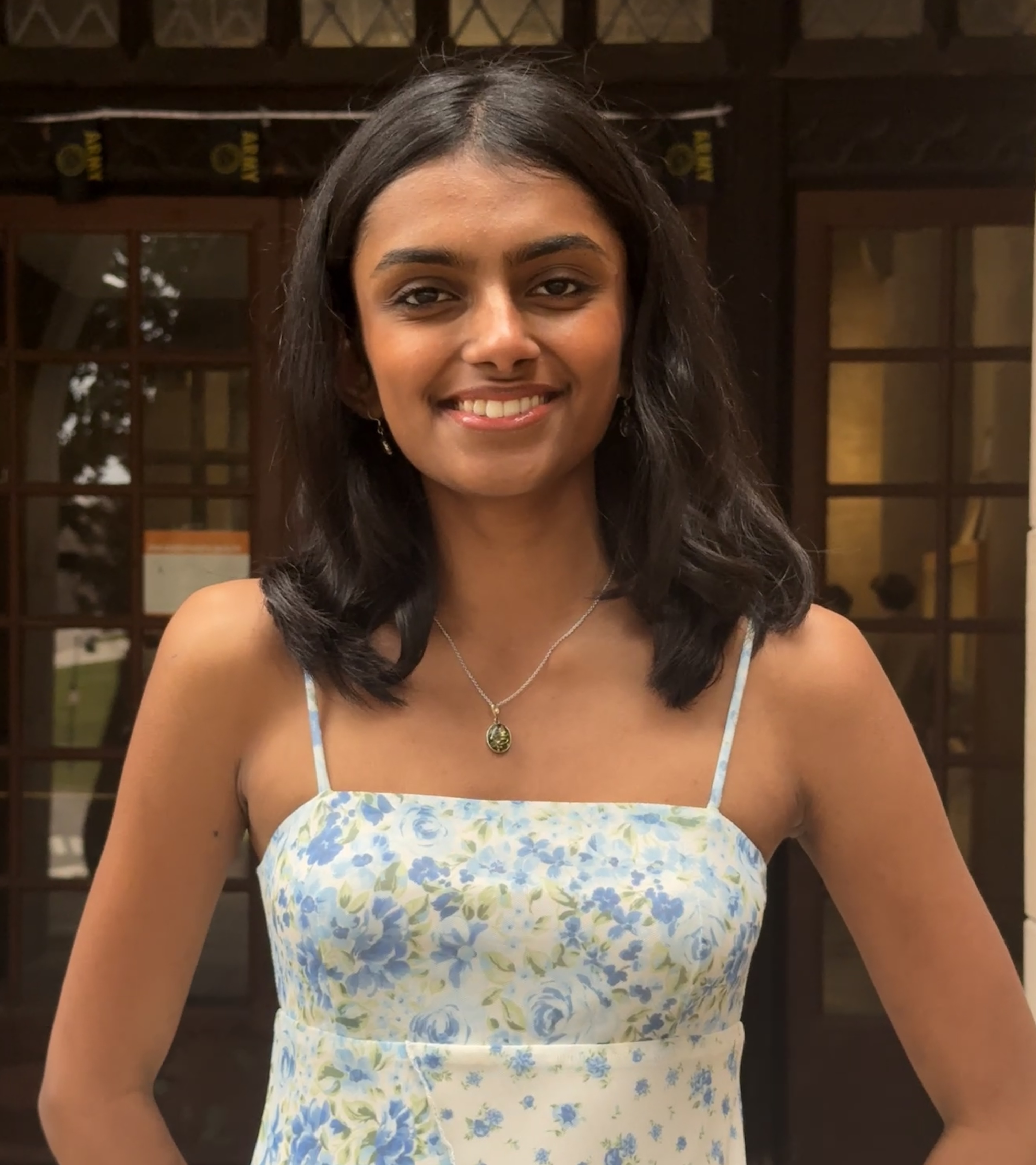
Dia Manoj (she/her) is a lover of reading, writing, and coding. She is a junior at The University of Tennessee, double majoring in Computer Science and English with a concentration in Creative Writing. She has developed several software projects, including an iOS app, and loves finding ways to combine her passion for storytelling and technology. She explores this fusion through her self-built writing website, diamanoj.com. Outside of her creative endeavors, she enjoys London fogs, vampires, and pestering her loved ones.

- Meet Our New Intern: Miranda Spurlock - October 20, 2026
- Sundress Reads: Review of WANT by nat raum - October 20, 2026
- The Wardrobe’s Best Dressed: they/she/he: ritual to forget your (un)becoming by dezireé a. brown - October 20, 2026