Project Bookshelf: Zoe Sweet

When I was in middle school, I went to a state competition for debate. I needed an extra event so I decided to take up carpentry. I had to design something, completely by hand, that had proper use. When I was thinking about what to do, I decided that I wanted to build something that I needed, so even if I lost, I would still have something cool in my room. I decided that I needed yet another bookshelf. Fast forward to the end of the story, I ended up getting eighth place in the state for that bookshelf, and eight years later, it is still in my room, holding up my books.

I organized that bookshelf very methodically. The top shelf was books that I wanted to read. This shelf was always full. The next shelf was fiction books that I had finished. While this shelf should have been overflowing, I always traded in the books that I had read for new books to read. Essentially, this shelf became my favorite books. The final shelf was the barest, this was filled with non-fiction books that I had already read. I liked having books on this shelf to make myself seem adult. The genre of horror dominates my shelf. Some of the books are flipped over because the covers frighten me, but the stories rarely do. If you look at my bookshelf objectively, one would find psychological horror, thriller, romance, coming-of-age, short stories, and poetry. 

I want to start off by suggesting a book that is on my theoretical top shelf, the one I cannot wait to read. The book that is first on my top shelf is The Final Girl Support Group by Grady Hendrix. This book was suggested to me by a friend and is now the book I am scrambling to read. The plot, as far as I can tell, is about every single girl who survives an attempted murder. They meet to cope with their experiences and connect with one another, only to have someone come after them. 

The books that I have read hold a very special part in my heart. I remember where I was when I read them and every person who I forced to read them after. To save you from the torture of me listing every book that I have read and loved, I shall only share three. 

The first of which is H2O by Virginia Bergin. I read this book during a thunderstorm to pass the time, which was probably the worst idea that I could have had. This book takes place in a world where the rain is deadly. If the water touches you, it burns your skin, and if you’re unfortunate enough to get caught in a downpour, you die. The suspense comes through the pages, when it rains in the book, you can feel the fear of the characters. I flew through the book eager to know what was going to happen next.

The next book on my middle shelf is Poet X by Elizabeth Acevedo. This book is a poetry collection following a young person finding themself through writing. As I read, I saw their life, I felt the way the speaker felt, and I hurt as much as they hurt. This is the best type of book. The ones where you are able to feel everything that the speaker feels. I was immersed. It is everything I love combined into one book.

The final book I have to share can be found on my theoretical middle shelf (it is no longer on the middle shelf of my bedroom bookcase). I’ve passed There’s Someone Inside Your House by Stephanie Perkins around to nearly every person I’ve met, so much so, that I have lost track of who has it now. This book is not for the faint of heart. It is about a murderer who enters the characters’ houses and rearranges everything to show that they are the next on the hit list. After I read this, my sister, who never cleans, decided to clean, and I truly believed that I was the next target. This was one of those books that I could not put down. I brought it everywhere, just so I could finish it faster. 

I know I left out the books on the bottom shelf, but those are the rejects, and not nearly good enough to recommend to others. Although the bookshelf I made all those years ago can only hold so many books, my brain is an infinite bookcase, waiting to be filled with new reads.


Zoe Sweet

Zoe Sweet is a writer, editor, and intern located in Chester, PA. She serves as the editor of Widener Ink, Widener’s literary journal, writes for The Blue and Gold, and is an intern at SAFTA. She is currently studying Political Science and English with hopes of one day being a judge.

Sundress Announces the Release of 2023 Craft Chaps by Joshua Nguyen and Cynthia Guardado

Sundress Publications announces the release of this year’s free, downloadable Craft Chaps by Joshua Nguyen and Cynthia Guardado.

From self-publishing scams to academic presses, Joshua Nguyen explains the pitfalls and pleasures of the publishing world in Hidden Labor & The Naked Body: Work They Don’t Prepare You For After Publication. Useful examples of tax spreadsheets and promotion calendars are balanced with provocative writing prompts such as creating an ekphrastic poem about your own author photo or writing an unprofessional author bio listing all your insecurities. With humor and practical advice, Nguyen takes writers step-by-step through what they will have to become (accountant, social media manager, fundraiser, booking agent), while easing the anxieties of post-publication life.

Part lyric poem, part memoir, part workbook, Memories We Never Had: Writing in a Postcolonial Existence lays a path for interrogating personal and political histories. Cynthia Guardado destabilizes memory, queering the past to reveal that what we do not remember is as important as what we do: last words not spoken, questions not asked, wars not fought, yet whose consequences can be felt for generations. By constructing their own, chosen pasts, writers can build a present moment and a future to counter oppressive, white, academic, and literary standards often internalized within oneself.

Download them for free on the Sundress website here!

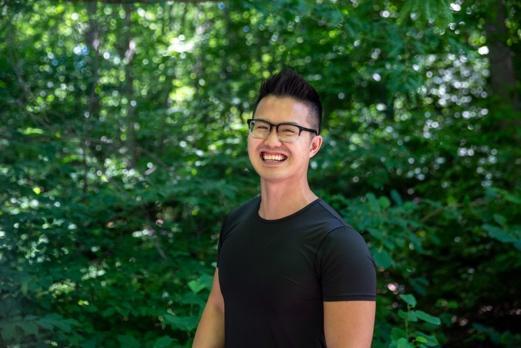
A picture of Joshua Nguyen in front of a tree, smiling. Short hair, glasses, black t-shirt.

Joshua Nguyen is the author of Come Clean (University of Wisconsin Press, 2021), winner of the 2021 Felix Pollak Prize in Poetry and winner of the 2022 Mississippi Institute of Arts & Letters Poetry Award. He is also the author of the chapbook American Lục Bát for My Mother (Bull City Press, 2021). He is a Vietnamese-American writer, a collegiate national poetry slam champion (CUPSI), and a native Houstonian. He has received fellowships from Kundiman, Tin House, Sundress Academy for the Arts, and the Vermont Studio Center. He is the Wit Tea co-editor for The Offing Mag, the Kundiman South co-chair, a bubble tea connoisseur, and loves a good pun. He is a PhD student at The University of Mississippi, where he also received his MFA.  

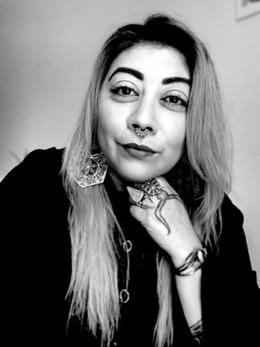
A black and white photo of Cynthia Guardado, looking at the camera. Long hair, resting chin on hand, tattoos on hand.

Cynthia Guardado (she/her/hers) is a Los-Angeles born queer Salvadoran poet and professor. She is the author of two collections of poetry: Cenizas, (University of Arizona Press, 2022) and ENDEAVOR (World Stage Press, 2017).

Sundress Publications Announces the Pre-Orders for Heather Bartlett’s Another Word for Hunger

Sundress Publications announces Heather Bartlett’s debut poetry collection, Another Word for Hunger, a spare, honest, and tender debut that nimbly contemplates the complications of love, mother/daughter relationships, loneliness, religion, sex, misogyny, queerness, and gender.

At its essence, this collection is about desire and love, and the ways the two intersect—and don’t. Short poems with short lines that cut with their sharp precision, this collection begins in adulthood and intimacy before journeying back to a time when notions of heteronormativity are challenged and examined. Here is a spectrum of formative experience: “someday I will learn / what it means to want more / woman she says …”

Maggie Smith, author of You Could Make This Place Beautiful, says, “The poems in Heather Bartlett’s Another Word for Hunger, their movements confident and precise, explore the intricacies of desire, memory, and perspective—and the ways language can both fail us and save us. What an exciting debut collection!

Pre-order your copy of Another Word for Hunger here.

Heather Bartlett (she/her) is a poet, writer, and professor. Her poetry and prose can be found in print and online in journals such as the Los Angeles Review, Ninth Letter, RHINO Poetry, and others. She holds an MFA in poetry from Hunter College and is a professor of English and Creative Writing at the State University of New York College at Cortland, where she teaches in the Professional Writing Program and directs Cortland’s visiting writers series, Distinguished Voices in Literature. She is the founding editor of the online literary magazine Hoxie Gorge Review.

Sundress Academy for the Arts Now Accepting Nonprofit Management Internship Applications

The Sundress Academy for the Arts at Firefly Farms, a 501(c)(3) non-profit organization, is seeking a Nonprofit Management intern for a six-month position. Each part-time position would consist of approximately 5-10 hours of work per week and run from June 30th, 2023 to January 5th, 2024. All applicants must be local to the greater Knoxville, TN area.

The Sundress Academy for the Arts (SAFTA) is an entirely volunteer-run organization that hosts residencies, workshops, and retreats centered on creative writing in all genres. Located on a 45-acre farm twenty minutes from downtown Knoxville, SAFTA’s mission is to give writers of all levels a chance to work with nationally renowned professionals in their field as well as uninterrupted time to focus on their creative work.

The Nonprofit Management intern’s responsibilities include the preparation of documents necessary to run an independent writer’s residency, such as writing press releases, composing blogs, fundraising, collating editorial and residency data, research, upholding SAFTA values, and more.  The intern will also be needed to help facilitate Zoom and in-person events.

Preferred qualifications include:

• Fluency in interpersonal communication

• Strong written communication skills

• Experience with WordPress, Zoom, Google Sheets, and/or other online mediums

While the internship position is unpaid, our staff gain real-world experience in working with online event planning, nonprofit management, running a residency, communications, and more while creating a portfolio of work for future employment. SAFTA staff work alongside members of both the local and national literary community through workshops and readings, which staff are able to attend for free during their tenure with the organization.

To apply, please send a resume and a brief cover letter detailing your interest in the position to the Staff Director, Z Eihausen, at saftastaffdirector@gmail.com. Applications are due by Monday, June 5th, 2023.

For more information, visit our website at www.sundressacademyforthearts.com

The Wardrobe’s Best Dressed: Another Way to Split Water by Alycia Pirmohamed


This selection, chosen by guest editor Alyse Bensel, is from Another Way to Split Water by Alycia Pirmohamed, released by YesYes Books in 2022.

Hinge

Tonight I am all joint and animal dark. My heel blots out the moon, 
	vanishes the small nod of light. And yes,
I prayed today, verging into my bismillah before settling 
		on the broken.

I stoop into my longings, plot a seed in every corner. Last week 
	I titled another page with my body 
		and surrendered every bending, splitting line of myself
to the making.

When we refer to plants, we call this positive phototropism, 
		a body rivering toward the light.
I want to river toward the light. I want to lean my neck toward 
	a thing until I, too, become ism,

scientific and named into truth. 
	Today, I walked through a dream that wasn’t mine, and I 
		thought of you waiting at the end of it,
as if to gather me

and maybe that’s just the kind of woman I am—no matter 
	how many times I halve the moon or find myself in a room
without a window, I know Allah 
		sees everything, every hand planting something new,
every metaphor for the tree it becomes. And yes, 
	I prayed today, but planting my palms together has never 
		felt like blossoming up the side of a mountain.
The only time these hands have ever flowered,

have ever been used for something good, 
		was that spring at Yamnuska, where we found a clear
blue door of glacial water, and I walked right through 
	your reflection.

Alycia Pirmohamed is a Canadian-born poet based in Scotland. Her debut collection Another Way to Split Water was released internationally in 2022 by YesYes Books in the United States and Polygon Books in the UK. She is also the author of the pamphlets Hinge and Faces that Fled the Wind and the collaborative essay Second Memory, which was co-authored with Pratyusha. She is the co-founder of the Scottish BPOC Writers Network, a co-organiser of the Ledbury Poetry Critics Program, and she currently teaches on the MSt. Creative Writing at the University of Cambridge. She is the recipient of several awards, including the 2019 CBC Poetry Prize, the 92Y Discovery Prize, the Ploughshares Emerging Writer’s Award, and the 2020 Edwin Morgan Poetry Award.

Alyse Bensel is the author of Rare Wondrous Things: A Poetic Biography of Maria Sibylla Merian (Green Writers Press, 2020) and three chapbooks. Her poems and essays have appeared or are forthcoming in Alaska Quarterly ReviewCream City ReviewSouth Dakota Review, and West Branch. She serves as Poetry Editor for Cherry Tree and teaches at Brevard College, where she directs the Looking Glass Rock Writers’ Conference. 

An Interview with Jonaki Ray, Author of Lessons in Bending

Ahead of the release of Lessons in Bending, author Jonaki Ray and Editorial Intern Amber Alexander sat down to discuss duality, survival, loss, and how science lends itself well to Ray’s personal storytelling. 

Amber Alexander: Lessons in Bending is not only the title of the collection but the first poem as well. Can you speak to the importance of this phase for both respectively?

Jonaki Ray: You have started this interview with a great question! The title of the collection, Lessons in Bending, is the same as that of the first poem because the phrase represents the essence of both. Those who are powerless, like the narrator in the first poem, learn that survival sometimes means somehow remaining unbroken; the world also teaches, through various inequities, who has the power versus who is powerless and has to bend, metaphorically or literally. I was also inspired to keep the collection with the same title because the poems represent the voice of those who are voiceless—the incarcerated, refugees, migrants, and immigrants—who learn these lessons, and yet, remain resilient.

AA: Can you speak to the recurring motif of freedom and forgiveness? How do these two intwine themselves within this chapbook? Where do they come into conflict?

JR: One of the most moving experiences of my life was traveling through Vietnam and Cambodia—it inspired the poem, “Killing Trees,” of this collection. At a place where the Khmer Rouge regime imprisoned people, one of the survivors could be seen sitting at the gate, and despite (or perhaps because of) what he has been through, he spoke about forgiveness. This stayed in my thoughts, and the poems in this collection swirl around the idea of forgiveness and how forgiving can be freeing. Yet, the paradox of life remains that forgiveness is nearly impossible, especially when there isn’t a single entity or symbol to forgive, and the inequities are systemic rather than personal. That is when these motifs come into conflict.

AA: Your poetry explores a number of different forms, lineation, and structures. Does your experimentation with structure and structureless poems in this collection serve to tell a bigger story and its complexities—for example, the rigidness of “Six Feet” compared to the chaotic lineation of “You Will be Saved”? Does “Evacuation” tell a visual story and, if so, can you elaborate?

JR: I have recently started using different forms and visual poetry because they offer so many more ways, at least for me, for expression. Another reason for these varied forms is that I often start a poem based on an image or something that has moved me that evokes a visual response to me. For instance, the poem, “Evacuation,” came about because of the news and images during the evacuation from Kabul recently. The words and space represent the idea that as refugees, or former citizens trying to get evacuated, the first idea that evaporates is that of citizenship. The iconic and visceral image of bodies falling from the planes that are taking off without them represented the lack of empathy and dehumanization of those who need the most compassion and help. I tried to express that concept through the free-falling words on the page. In contrast, “You Will be Saved” represents the chaos and hurt of people, especially women of color, who are caught in the vicious cycle of shelters, abuse, and incarceration, and often slip through the cracks in the system.

AA: In “Two Hundred Thousand,” there is urgency and desperation within the repetition. Would you speak about the process of creating the purposefulness of this, and what the most important take away you have from this piece specifically?

JR: The cyclic nature of history and the ebbing and flowing of who is considered a citizen and who an immigrant are fascinating topics for me. This particular poem showcases the fact that while around World War II, two hundred thousand people were deported from Paris, history keeps repeating, and even today, there are people who are not the “correct” color or citizenship and are being sent “back” or deported. The rhythm came naturally when I started writing this poem.

AA: How did the influence of nature find a way into Lessons in Bending and the overall story you tell? I’m thinking of examples like “The peak of summer temperature is / measured by how fast tears evaporate.” from the poem “A Mirage at the Border,” forget-me-nots in “99,” and titles such as “The Killing Trees” and “Dandelion Time.”

JR: Nature is inevitably linked to injustice because again, the devastating effects of droughts, floods, and deforestation, and climate change, for instance are also impacting those who are powerless the most, whether it is someone considered outsiders, migrants, or women and children. I try to bring out these parallel threads through interweaving nature into my writing.

AA: This collection tells many different stories with common themes such as home, loss, yearning, and belonging. How does the power of storytelling inspire you, especially with these poems and these themes?

JR: Storytelling came to me fairly recently—I studied science and while I was always an avid reader, I was more comfortable with the world of observation and data. However, I realized that there is a science to storytelling, too, especially if I want to distill my ideas into concise words, or want my readers to imagine the story in their minds as they read my words. As I mentioned earlier, as poets and writers, we are both witnessing and testifying to what is happening around us through our words. Stories are also what help us realize that all of us have a commonality when we think about loss, belonging, yearning, and searching for home. Another aspect to storytelling is that all these themes have their associated traumas, and it is a powerful and therapeutic way of dealing, or attempting to deal, with those.

AA: Do any one of your pieces speak to you the most?

JR: I can’t choose any one piece—they all speak to me because there is a part of me in each of them!

Lessons in Bending is available to download for free on the Sundress website


Jonaki Ray was educated in India (Indian Institute of Technology Kanpur) and the United States (University of Illinois Urbana-Champaign). A scientist by education and training, and a software engineer (briefly) in the past, she is now a poet, writer, and editor in New Delhi, India. Honours for her work include Pushcart and Forward Prize for Best Single Poem nominations in 2018; the 2019 Iceland Writers Retreat Alumni Award; and First Prize in the 2017 Oxford Brookes International Poetry Contest (ESL). She has also been shortlisted for multiple awards, including the 2021 Live Canon Chapbook Contest and the 2018 Gregory O’Donoghue International Poetry Prize. Her full-length poetry collection, Firefly Memories, was published by Copper Coin in 2023. She is on Twitter as @Jona_writes, on Instagram as jonaki_stories, and on the advisory board of the YouTube channel, Just Another Poet. You can read more about her at www.jonakiray.com.

Amber Alexander holds a B.A. in English with research distinction and triple minors (Creative Writing, Professional Writing, and History) from The Ohio State University. They plan to pursue graduate level studies in the near future and currently works in higher education. They have previously worked on the Editorial Staff for Cornfield Review, where they has also been published. Alexander earned multiple awards for poetry, prose, playwriting, and creative nonfiction while an undergrad.

The Wardrobe’s Best Dressed: Another Way to Split Water by Alycia Pirmohamed


This selection, chosen by guest editor Alyse Bensel, is from Another Way to Split Water by Alycia Pirmohamed, released by YesYes Books in 2022.

Meditation while Plaiting my Hair

I part my hair straight down the middle,
a river on either side—
in the past, someone shaped like me
poured water from a metal carafe
straight into my mouth,
the echo of my river submerged in your river—
lately, I read about storms all night
because there is no lightning here; instead
I see the wind pull down the tautness
of trees and the swans at the lagoon part
through the wreckage.
Each one is another translation for love
if love was more vessel than loose thread.

		Once, we sat poolside outdoors in Dar es Salaam
		and I chose survival over your body.
		Why is it I only ever see the night heron alone?
		I braid neatly together my hair, soaked by salt
		and the moss of a body I do not touch,
		the spine of a book left open on the page
		I forgot to bookmark,
		the spine of a book I left out in a storm,
		each of its rooms sliding into our margins,
		into all these tendrils of blank space—tell me, when did I let us splinter?

Alycia Pirmohamed is a Canadian-born poet based in Scotland. Her debut collection Another Way to Split Water was released internationally in 2022 by YesYes Books in the United States and Polygon Books in the UK. She is also the author of the pamphlets Hinge and Faces that Fled the Wind and the collaborative essay Second Memory, which was co-authored with Pratyusha. She is the co-founder of the Scottish BPOC Writers Network, a co-organiser of the Ledbury Poetry Critics Program, and she currently teaches on the MSt. Creative Writing at the University of Cambridge. She is the recipient of several awards, including the 2019 CBC Poetry Prize, the 92Y Discovery Prize, the Ploughshares Emerging Writer’s Award, and the 2020 Edwin Morgan Poetry Award.

Alyse Bensel is the author of Rare Wondrous Things: A Poetic Biography of Maria Sibylla Merian (Green Writers Press, 2020) and three chapbooks. Her poems and essays have appeared or are forthcoming in Alaska Quarterly ReviewCream City ReviewSouth Dakota Review, and West Branch. She serves as Poetry Editor for Cherry Tree and teaches at Brevard College, where she directs the Looking Glass Rock Writers’ Conference. 

The Wardrobe’s Best Dressed: Gold Hill Family Audio by Corrie Lynn White


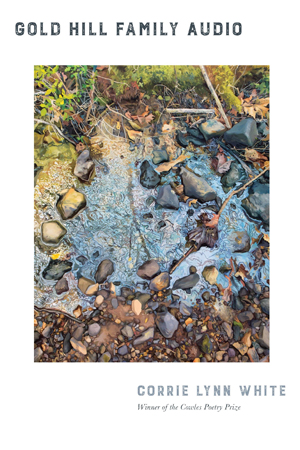
This selection, chosen by guest editor Alyse Bensel, is from Gold Hill Family Audio by Corrie Lynn White, released by Southeast Missouri State University Press in 2022.

Suck Creek Scramble

He ties a rope
		around my waist
so I can step
				into a waterfall.
		Ferns, redbuds,
						and cuckoos
weave us in.
		I delete Tinder.
At Christmas,
				we drag boxes
		of golden glass balls
						from the closet.
I sleep next to him
		like a hog
when it finds
				cold mud,
		like I’m on a boat
						taking me slow
and straight
		to death,
like an anchor chain
				when it hits
		the bottom of
						the ocean floor.

Corrie Lynn White is the author of Gold Hill Family Audio (Southeast Missouri State University Press, 2022). A 2021 Tennessee Arts Commission Fellow in Poetry, she is the recipient of the 2013 Amon Liner Poetry Award from the Greensboro Review. Originally from Gold Hill, North Carolina, White currently lives in Chattanooga.

Alyse Bensel is the author of Rare Wondrous Things: A Poetic Biography of Maria Sibylla Merian (Green Writers Press, 2020) and three chapbooks. Her poems and essays have appeared or are forthcoming in Alaska Quarterly ReviewCream City ReviewSouth Dakota Review, and West Branch. She serves as Poetry Editor for Cherry Tree and teaches at Brevard College, where she directs the Looking Glass Rock Writers’ Conference. 

The Wardrobe’s Best Dressed: Gold Hill Family Audio by Corrie Lynn White


This selection, chosen by guest editor Alyse Bensel, is from Gold Hill Family Audio by Corrie Lynn White, released by Southeast Missouri State University Press in 2022.

Getting Clean

The body is honest in bath-water. 		Belly button is communion cup.
Submarine ears open to 		the smear of piano downstairs—
the creaky opening of stove. 		I almost smell my mother’s kitchen
and run to ask her: 		Can I lie down in your tomatoes and corn?
She loved the praising 		her mother never gave. I loved it, too,
wanted to say to her, 		Let’s run to the mirror and see if we’re beautiful!
But I had to leave that house, 		tiptoe off the deck’s rotting steps
until the horse-grazed knoll 		broke me open over its knee.
I wouldn’t go far in the grass 		before I found her inside me,
and the men’s voices inside of us 		speaking words like:
Blessed are the pretty and quiet. 		The wind itself whispered it
amongst the manure. 		Tonight, she isn’t here. The bath water is cold
where I sit whole, dripping, 		and ask what comes this way
but the swallow of an unplugged drain, 		the shiver of standing straight up.

Corrie Lynn White is the author of Gold Hill Family Audio (Southeast Missouri State University Press, 2022). A 2021 Tennessee Arts Commission Fellow in Poetry, she is the recipient of the 2013 Amon Liner Poetry Award from the Greensboro Review. Originally from Gold Hill, North Carolina, White currently lives in Chattanooga.

Alyse Bensel is the author of Rare Wondrous Things: A Poetic Biography of Maria Sibylla Merian (Green Writers Press, 2020) and three chapbooks. Her poems and essays have appeared or are forthcoming in Alaska Quarterly ReviewCream City ReviewSouth Dakota Review, and West Branch. She serves as Poetry Editor for Cherry Tree and teaches at Brevard College, where she directs the Looking Glass Rock Writers’ Conference. 

The Wardrobe’s Best Dressed: Gold Hill Family Audio by Corrie Lynn White


This selection, chosen by guest editor Alyse Bensel, is from Gold Hill Family Audio by Corrie Lynn White, released by Southeast Missouri State University Press in 2022.

Instead of Having Kids

I clog on a quarter-inch piece of plywood
at Slick’s fiddle circle on Wednesday nights.
Instead of suffering raw nipples,

I strap on swimming goggles and make soap,
stir lye into a steel pot and run outside
to shovel the valley’s air into my mouth.

In my Civic, I cross Roan Mountain
and describe the silver hill I chase to the teacher
across the hall. The silver is hoar frost, he says,

frozen fog clinging to trees. Instead of watching
the baby’s eyes shift from gray to blue,
we hike to the Walls of Jericho,

step inside a January creek, hide inside
a dead hollow tree and crawl under
a cemetery’s barbed wire.

My friends with babies sing more than ever.
I ask them how quiet the old self becomes—
the self before the child. My sister gets jealous

on Christmas Day when I zip my coat
and walk outside without children running after
to zip-up and carry. The rare sun out,

I only want the North Sea and Roker Pier.
Whichever path you don’t choose
gets lodged somewhere in your throat.

Corrie Lynn White is the author of Gold Hill Family Audio (Southeast Missouri State University Press, 2022). A 2021 Tennessee Arts Commission Fellow in Poetry, she is the recipient of the 2013 Amon Liner Poetry Award from the Greensboro Review. Originally from Gold Hill, North Carolina, White currently lives in Chattanooga.

Alyse Bensel is the author of Rare Wondrous Things: A Poetic Biography of Maria Sibylla Merian (Green Writers Press, 2020) and three chapbooks. Her poems and essays have appeared or are forthcoming in Alaska Quarterly ReviewCream City ReviewSouth Dakota Review, and West Branch. She serves as Poetry Editor for Cherry Tree and teaches at Brevard College, where she directs the Looking Glass Rock Writers’ Conference.