
Sundress: Welcome to Lyric Essentials, where writers and poets share with us a passage or poem which is “essential” to their bookshelf and who they are as a writer. Today Sade Andria Zabala reads a passage by Annabelle Nyst.
You mentioned when you submitted this clip by Annabelle Nyst that you stumbled across this passage by chance on tumblr when she was unknown. Can you tell us a bit about Nyst and your experience coming across her work?
Sade Andria Zabala: Yes, I don’t think she’s written that much online though. I did stalk her blog a bit and know she is an Australian who moved to New York, now working in advertising for BuzzFeed. But even her blog entries are worth reading! When I chanced on the poem the first time, I was awestruck. Kind of when you read shocking news or something – like literal physical reaction of drawing back from the laptop. When you read it for the first time, it seems something purely aesthetical which happens to be good writing. I saved it for future reference in case I wanted to reread. A year or so later, I changed, lived, grew up some more. Reread it by chance and was like, “Yup, wow, that’s still me. That’s really me in a poem now, shit.” I decided I was going to get it tattooed (laughs).
Sundress: Which line did you pick?
Sade Andria Zabala: ALL OF IT! (laughs) Then I got more tattoos and realized it wasn’t going to fit on my forearm. I already have an Albert Camus tattoo there now so… I’m considering getting just the last line, “When she’s high she’ll dress down for you, all skin, and skin, and skin.” If my impulsiveness gets the better of me and I run out of arm space, I’ll do “skin, skin, skin” on my thigh instead.
Sundress: “Skin, skin, skin” has such a great sound. We did another Lyric Essentials with Connie Post, who picked “Two Countries” by Naomi Shihab Nye. She said of the opening line, “The simple starkness and power of ‘skin remembers’ those two words, together, in and of themselves, are enough to make any reader want more.” There’s a similar magic in the repetition of “skin” at the end of this poem. Can you describe it for us?
Sade Andria Zabala: “Skin remembers” well… that is definitely true. (smiles) I connected with this piece as a young woman undergoing sexual awakening and maturing, navigating independent life. That’s a turning point for me. I was raised, and still live in, an insanely conservative Catholic society who shuns anything that is not Maria Clara (our expression for traditional house-family-bound Filipina). I was spoon-fed everything! So now, there’s this girl in her early twenties experiencing the real world for the first time, experimenting, clueless.
Consider the line “when she’s drunk she’ll dress up for you.” In the game of mate-finding, that’s particularly true. Drunk infatuation. Drunk on alcohol. The superficiality of attracting, luring someone. Like imagine being in a party with said someone.
Connect that to the skin line, “when she’s high she’ll dress down for you.” It alludes both to sex, and intimacy. Gone the defense of the bar crowd and mutual friends, the facade of small talk and well-thought outfits. There you are! Facing this person wearing all your insecurities. Scar on your right thigh from getting hit by a bike at 5, scar on your knee from tripping down the bedroom stairs one too many times, scar on your face from someone’s surfboard.
You are there not to attract anymore, but to give them part of you- flesh (and tiny peek at your soul).
No matter how serious or casual the affair, we leave parts of ourselves to someone when we connect with them at such an intimate level and vice-versa. Yes, even one-night stands. So that repetition “skin, skin, skin” was especially haunting. No more party. Just you, him. Empty apartment, well-past midnight, lamp lights, silhouettes, bodies writing lyrics. The imagery!
Reading that part was like seeing a high-speed montage of all my past lovers.
Even now I can’t help but tangibly remember some of those memories. (pauses)
It’s nostalgic, I guess… Skin remembers.
Sundress: What do you make of this part, placed in the center of her poem: “She said, ‘I break the law because I’ve never broken a heart and I want to know what it feels like to be the brick not the window pane.’”
Sade Andria Zabala: Again, it’s going to be a personal answer as I relate to this poem so much. Perhaps the author meant the first half to be literal. Being stuck in a loveless relationship from your teens, your first and longest relationship where you’re too dumb to know how to get out of. It makes you go and discover new things. Drugs. Vandalism. Art. People. General acting out and not giving a fuck without even being aware of it. Rebellious? Looking for trouble.
My romantic relationships prior were not healthy. The Filipino mentality on love tends to be unhealthy. Girls are brainwashed to think marriage is the end-goal, that marrying the first guy you ever date or sleep with is a must, that you stick with them despite emotional and physical abuse. Yeah. Then you do break-up despite the protests of your family, but the relationships after that sort of repeat itself. You go after guys, relationships that tend to be one-sided, that have a chance of not working out because maybe you’re not sure you both can (or even want to) commit. You’re stuck in this rut you’ve made for yourself because you’re still young and it is difficult to unlearn. It is more a challenge to unlearn than learn.
What I’m trying to say is – this line basically takes on the transition from girl to woman, from doormat to dominant. Or at least Nyst is expressing her desire for it. You cannot live life always playing the victim, the safe side, the good guy. Sometimes, you gotta be the villain. You gotta face your demons and become them for awhile. You gotta do some fucked up stuff to learn, to grow, to understand and discover yourself. Even at the cost of leaving a mess out of someone.
Let me be, for once, the one to hastily pack my clothes and shut the door while you lay sleeping. Let me be shameless, selfish. Let me be the one to hurt and not the one hurting.
Damn… love really is just a cycle of us hurting each other because we were hurt by someone else.
Sundress: You mentioned earlier you read this poem, and then, after having some life experience, came back to it later, and read it with more meaning. How has that experience affected you as a writer?
Sade Andria Zabala: The best way possible, if you can call it that. You know what they say, tragedy makes for good art. I had actually become somewhat addicted to this process – destroying myself, fixing myself, the exhilarating feeling of loving myself again. I purposely went into this lifestyle not just because I enjoyed it, but because the control was empowering. The self-destruction at each experience was addicting. I’d say some of my best writing came during this time. I found my voice, my style after years of doing writing prompts attempting to mimic other writers I looked up to thinking that was the way to go, to be a better artist. Some of my earlier writing sound insincere because to that. That’s why I’m so, so proud of War Songs, my new book. It is a sort of homage to this poem and the stories that come with it.
But before that? Jeez, was I mess! A fascinating mess, albeit haha. I am now trying to live artistically without that crutch. To write and create regardless of how “perfect enough” a piece might feel for me, compared to my other writing. “Don’t think about making art, just get it done. Let everyone else decide if it’s good or bad, whether they love it or hate it. While they are deciding, make even more art.”
But it can be difficult. Sometimes I fold into myself again, take a hit or two, a drug, a drink, purposely allow my sadness to gnaw at me as an excuse to get in the “mood” to write. The moment the artist’s life ceases to be tragic, well, you’re fucked.
Lately I’ve been somehow satisfied, the good days are more constant and I gotta remind myself life doesn’t have to be dark to be interesting. It is okay to live a “boring” life because you are loved, you are loved, you are loved and you do not need to self-destruct to know it, you do not need to write a poem to show-off to the world that how you feel is real.
My poems don’t always need to scream bloody murder I realize that now. I’m trying to write about other things, despite the theme not being my strongest suit. I’ve been trying not to dismantle myself for the sake of dismantling myself.
It is okay to be okay. I am trying.
Sundress: Are there any other Nyst poems you can point us to? And, since Nyst’s poetry mostly just ghosts around on tumblr, are there other tumblr poems and poets you can point us to who you found similarly inspiring?
Sade Andria Zabala: Nyst doesn’t write poems anymore, I think, but there’s this post on her blog called “This Is Probably About You” and oh, god, it’s wonderful in the worst way possible.
On the latter, yes, definitely. There’s “Emergencies” by Buddy Wakefield. There’s “Love Poem” by Rudy Francisco, “OCD Poem” by Neil Hillborn, “How To Be Alone” by Tanya Davis (directed by Andrea Dorfman), and Shane Koyczan’s “6:59 AM”. Marianna Paige, Quay K., and, fuck, probably one of the best undiscovered poems and writers ever “If I Wanted to Fuck You” by hugewineglass on tumblr.
~
What is essential to you as a writer or poet? What piece changed your life? Gave you hope, validated and voiced your fears, was there while you triumphed over them? What piece brings you joy? Made you laugh or grin like a fool? Who was it who made you sit back in wonder, inspiring you to be a stronger writer? We want to know. Send us a recording (or packet of short recordings) of you reading your Lyric Essential—a short story, a handful of poems, an excerpt or two—to SundressLyricEssentials AT gmail DOT com. Then we’ll talk.
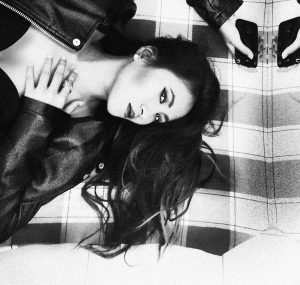 Sade Andria Zabala is a 24-year-old Filipina surfer and nomad sometimes residing in Denmark. She has self-published two collection of poems – Coffee and Cigarettes and War Songs, the latter released just this September. Zabala has appeared on literary sites/publications such as The Chapess Zine, Berlin Artparasites, Germ Magazine, Hooligan Magazine, The Rising Phoenix Review, and more. In her spare time she likes to eat words and drink sunlight. You can reach her at surfandwrite.tumblr.com.
 Annabelle Nyst is a creative at BuzzFeed and may be found on twitter at @annabelle_nyst.

 Born in Lithuania in 1911, Czeslaw Milosz spent much of his childhood in Czarist Russia, where he published his first collection of poems, Poemat o czasie zastyglym at the age of twenty-one. As an adult, he defected, leaving Poland due to the oppressive Communist regime which had come to power post WWII. He moved to the United States where he lived from 1960 until his death in 2004. Milosz wrote his poems, novels, essays, and other works in his native Polish. He was awarded the Nobel Prize for Literature in 1980.
 Connie Post served as the first Poet Laureate of Livermore, California from 2005 – 2009. Her work has appeared in The Big Muddy, Calyx, Cold Mountain Review, Crab Creek Review, Comstock Review, The Pedestal Magazine, Slipstream, Spoon River Poetry Review, and The Valparaiso Poetry Review. Her awards include the Dirty Napkin Cover Prize, The Caesura Poetry Award, and the Montclair Poetry Contest. Her chapbook And When the Sun Drops was the 2012 Fall Aurorean’s Editors Choice Award. Her work has received praise from Al Young, Ursula LeGuin, and Ellen Bass. She has been short listed for the Jack Kerouac Poetry Prize, The Muriel Craft Bailey awards (Comstock Review), Lois Cranston Memorial Awards (Calyx), Blood Root Literary Magazine, and the Gary Gildner Award (I 70 Review). Her first full length book Floodwater was released by Glass Lyre Press in 2014 and won the Lyrebird award.
 Naomi Shihab Nye, born 1952 to an American mother and a Palestinian father, is a poet, songwriter, and novelist residing in San Antonio, TX. After 9/11, Nye spoke out against both terrorism and prejudice towards Arab-Americans. Her most acclaimed volume, Fuel (1998), was thus followed by 19 Varieties of Gazelle: Poems of the Middle East (2002). In 2012 Nye was named laureate of the 2013 NSK Neustadt Prize for Children’s Literature.


 Stevie Edwards is a poet, editor, and educator. She is Editor-in-Chief at Muzzle Magazine and Acquisitions Editor at YesYes Books. Her first book, GOOD GRIEF (Write Bloody 2012), received two post-publication awards, the Independent Publisher Book Awards Bronze in Poetry and the Devil’s Kitchen Reading Award from Southern Illinois University – Carbondale. Her second book, HUMANLY, was recently released by Small Doggies Press. Her poems have appeared in Verse Daily, The Offing, PANK, Vinyl, Devil’s Lake, Indiana Review, Salt Hill, and elsewhere. She holds an MFA from Cornell University and a BA from Albion College. She currently lives in Charleston, SC, where she works for a nonfiction publisher by day and is a poet by night.
 THERs (Counterpath Press, 2014), and The Pedestrians, a double collection of prose and poetry forthcoming from Wave Books. Museum of Accidents (Wave Books, 2009) was a finalist for the National Book Critics Circle Award and named one of the best books of 2009 by Publisher’s Weekly. Widely published, her poems have appeared in journals including: Barrow Street, Iowa Review, Pleiades, and Prairie Schooner. Zucker received a National Endowment for the Arts Fellowship in 2013 and currently teaches poetry at New York University.
 A past winner of the Jim Harrison Award for contributions to baseball literature, Tim Peeler has also been a Casey Award Finalist (baseball book of the year) and a finalist for the SIBA Award. He lives with his wife, Penny in Hickory, North Carolina, where he directs the academic assistance programs at Catawba Valley Community College. He has written thirteen books and three chapbooks.
 Laurie Byro‘s short stories and poetry have appeared in dozens of presses including: Loch Raven Review, The Literary Review, Triggerfish, Snakeskin, Redactions, Chaminade Review, Chronogram, Grasslimb, Re:al Journal, The New Jersey Journal of Poets, Red Rock Review, The Paterson Literary Review, and The 7th Quarry (from Wales) among others. She has won or placed in 39 IBPC competitions. In January 2011, Laurie was named one of the “Poets of the Decade” by the IBPC competition for her 2000-2010 work, amassing more awards than any competing poet. Her chapbook The Bird Artists was published in 2009 and Laurie was Poet Laureate of Allendale, NJ from 2009 to 2013. Her work draws on myth and fairytale and her experiences of foreign places in the years she worked as a travel agent. Her poetry insists upon the continuing importance of fantasy, mystery and “the other” in our lives. Laurie has been facilitating Circle of Voices, poetry discussion in NJ for over 15 years, currently at the West Milford Township Library where she is Poet in Residence.
 In 1962, at the age of 46, Stafford published his first major collection, Traveling Through the Dark, which won the National Book Award for Poetry the following year. In 1970 he was appointed the twentieth Consultant in Poetry to the Library of Congress. Stafford passed away in 1993 after having published 57 volumes of poetry. For more, visit:
  Anne Champion is the author of Reluctant Mistress (Gold Wake Press, 2013) and The Dark Length Home (Noctuary Press, forthcoming). Her work appears in Verse Daily, The Pinch, New South, Redivider, PANK Magazine, The Comstock Review, Thrush Poetry Journal, and elsewhere. She was a 2009 Academy of American Poets Prize recipient, a Pushcart Prize nominee, and a Barbara Deming Memorial Grant recipient. Find her at
  Traci Brimhall is the author of two full-length collections: Rookery (Southern Illinois University Press, 2010), winner of the 2009 Crab Orchard Series in Poetry and Our Lady of the Ruins (W.W. Norton, 2012), selected by Carolyn Forché for the 2011 Barnard Women Poets Prize. Her poem, “The Silk Road Epistles,” appeared in Sundress Publication’s 2011 Best of the Net anthology. A graduate of Sarah Lawrence College (MFA), and Western Michigan University (PhD), Brimhall is currently an Assistant Professor of Creative Writing at Kansas State University.
 rst winner of the Women’s World Poetry Slam, Gibson has performed in numerous venues across the states and been featured on C-SPAN, BBC, Air America, and Free Speech TV tackling topics such as gender, bullying, white privilege, sexuality, love, and war. She has released five full-length albums, most recently FLOWER BOY, and three books, THE MADNESS VASE, Pole Dancing to Gospel Hymns, and PANSY. Gibson in Boulder, Colorado.
 Jeremy Johnson is a writer out of Omaha, NE. He’s written plays, novels, books of poems, books for kids, and movies. Amid the slow chaos of nurturing a family of two kids and a beautiful wife, sometimes he’ll knock back a bottle of whiskey with some friends at an abandoned paper mill or follow the moon down some railroad tracks, thinking of songs.